-
We detected your language preference as English. Would you like to switch to the English version for a better experience?
Switch to English
Stay here



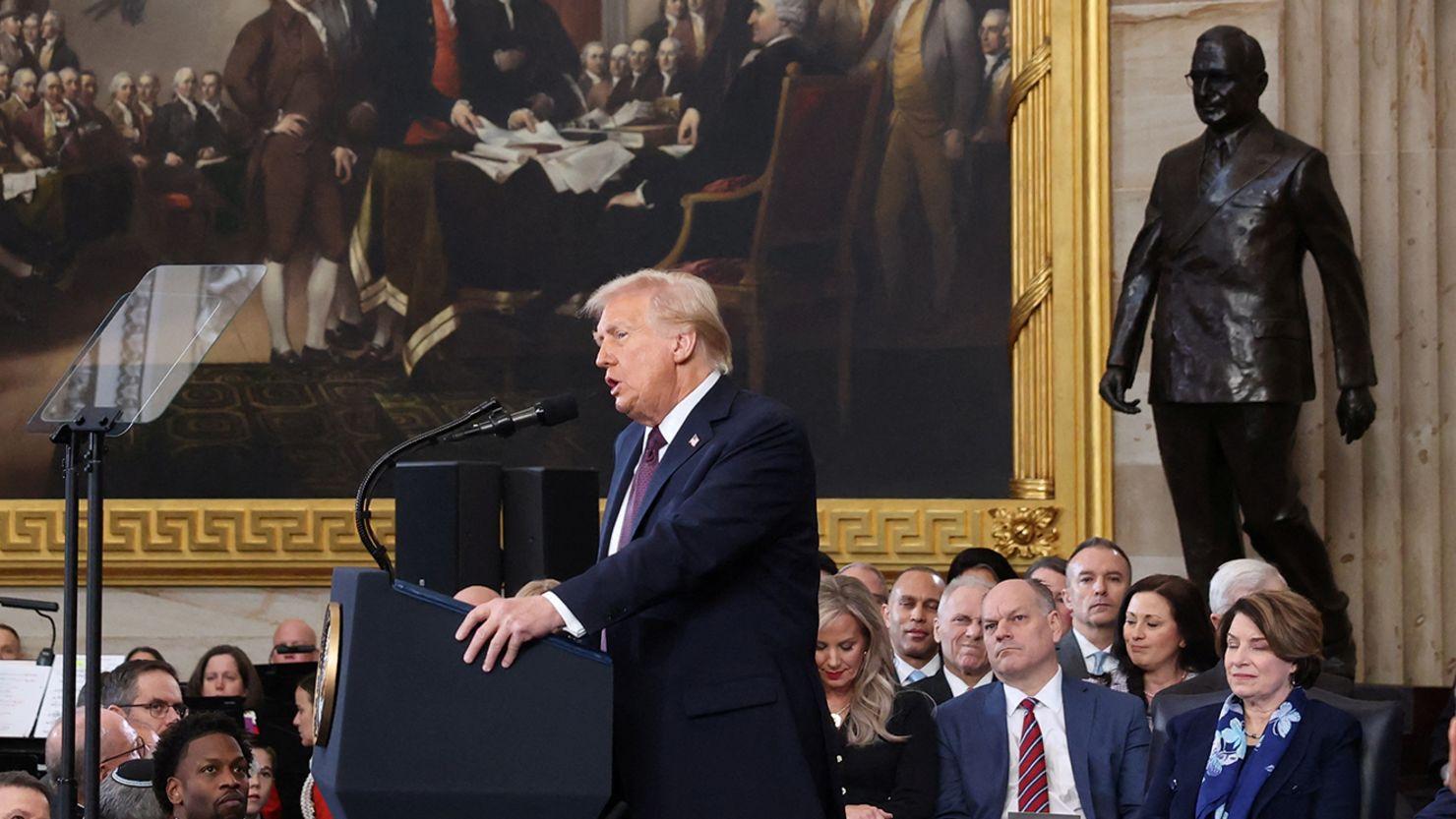
“From his previous term's policies on healthcare and his campaign responses and promises this time, we can identify clues such as reforming public health institutions, reshaping federal healthcare plans, and reducing high healthcare costs,” said Wang Yin, an attorney at JiaYin Law Firm, USA.
According to Wang, Trump's impact on the industry primarily comes through appointing key personnel in related agencies, including the Secretary of Health and Human Services (HHS), FDA Commissioner, CDC Director, and CMS Administrator. Policy changes largely depend on the individuals in these positions.
“Compared to previous U.S. presidents, Trump tends to make grandiose statements with limited follow-through and often acts unpredictably. This makes the next four years of pharmaceutical policies less predictable,” said Wang.
Katherine, a senior attorney at the well-known U.S. law firm Ropes & Gray, shares a similar view: “Trump's unpredictability means policy uncertainty remains high.”
Currently, compared to issues like trade, immigration, and the economy, healthcare policies appear to be a lower priority for Trump’s term.
According to Fierce Pharma, Mike Perrone, a biotechnology expert at investment bank Baird, stated in a research report: "Given Trump's focus on matters outside of healthcare and his more hands-off approach to government regulation, the life sciences sector is unlikely to face significant changes—at least not for now."
The Inflation Reduction Act (IRA), implemented in January 2023, has drawn widespread attention. It aims to reduce Medicare spending by enabling drug price negotiations, capping price increases, and lowering payment rates.
“The IRA was passed before the midterm elections with Vice President Harris casting the decisive vote. Whether the new administration will proceed with it without revisions is uncertain,” Wang said.
Wang noted that large pharmaceutical companies strongly oppose the IRA due to its focus on drug price negotiations, while Trump favors targeting pharmacy benefit managers (PBMs) for their rebate practices. Trump has advocated for eliminating rebates to promote transparency.
"Based on Trump's style, I don't think he would follow through on implementing a law left by the previous president in a conventional way," said Wang Yin.
In a report to clients after the November 5th election, analysts at the well-known Wall Street investment bank Jefferies unanimously agreed that efforts to repeal the IRA are unlikely to succeed. This aligns with Katherine's perspective.
"In the U.S., high drug prices are an important issue for the public. Based on Trump's past positions and his appointment of the CMS administrator, the policy trend of the IRA is unlikely to be reversed. The only uncertainty lies in how the law will apply to different products, and to what extent the government will have the power to set drug price caps and payment standards. These details will require further observation," Katherine said.
The most likely scenario is that the IRA will continue to be enforced, though individual provisions may be revised and adjusted.
Steve Usdin, a senior reporter for BioCentury in Washington, has written that leaders in the biopharmaceutical industry believe that the Republican-controlled Congress will incorporate reforms to IRA drug price negotiations into the 2025 tax legislation. This could include expanding the exemption for orphan drugs from price negotiations to products with multiple indications. It may also extend the 9-year grace period for small-molecule drug price negotiations (13 years for biologics) to resolve the "pill penalty" issue in the IRA.
U.S. public health institutions are facing both opportunities and challenges, especially the highly scrutinized FDA.
According to BioCentury, Trump 2.0 has the opportunity to make the FDA stricter, more flexible, and responsive to patients, while quickly adapting to scientific advancements. There's also the chance to significantly reduce the cost of developing biosimilars without compromising safety, which could help establish a stronger generic drug industry.
However, the greatest threat is intangible yet real. For instance, public trust in the FDA may continue to erode, and people may believe small-Kennedy's claims about institutional corruption. Experienced personnel may leave, affecting the FDA's ability to review medical products. Furthermore, the long "cooling-off period" set for FDA officials' departure might make it difficult to recruit newcomers.

Image source: BioCentury
Similarly, the NIH may face major reforms. It is seen by the industry as a key institution for funding basic science, but Trump has expressed dissatisfaction with its structure and efficiency, repeatedly proposing significant cuts to the NIH budget during his first term.
For China’s biopharmaceutical industry, the developments surrounding the Biosecure Act over the past year have undoubtedly drawn significant attention. However, the act was not included in the 2025 National Defense Authorization Act (NDAA), which could have expedited its path to becoming law.
According to Wang Yin, the fact that the act wasn’t included in the 2025 NDAA was not surprising. During the House voting stage, Republican Representative Michael Gallagher and others tried to incorporate it into the NDAA but failed. In fact, more than 1,300 bills were proposed for inclusion in the 2025 NDAA, but only around 350 were ultimately included, primarily focusing on U.S. military preparedness and national security. This indicates that, from Congress’s perspective, the Biosecure Act's importance and urgency in terms of national security are not as high as other priorities.
“It remains uncertain whether the new Congress will continue pursuing bills proposed by the previous session. New legislators may insist on advancing their own agendas and proposals,” she noted.
However, some believe the likelihood of the Biosecure Act passing is higher.
“The Biosecure Act is a bipartisan initiative supported by both chambers of Congress. Its passage during the new congressional term is almost inevitable,” Katherine told PharmaTalk. Furthermore, she believes the final version of the act is unlikely to differ significantly from the draft currently under consideration.
Nielsen Hobbs, an analyst at the globally renowned consulting firm Citeline and editor of Pink Sheet, publicly stated, “Trump’s victory has introduced considerable uncertainty for the biopharmaceutical industry, but one thing is certain: the Biosecure Act now seems more likely to pass.”
Hobbs explained that the next Congress's primary focus will be on tax and healthcare legislation, and the goals of the Biosecure Act align closely with the incoming Republican majority’s agenda. Trump has previously promised to significantly increase tariffs on Chinese imports as part of his “America First” agenda to promote the reshoring of manufacturing.
Yalin Zhang, a partner at Jaffa Investment Fund, expressed a similar viewpoint in an article published in PharmaTalk. He predicted that Trump would firmly implement the Biosecure Act because its primary goal is to encourage the reshoring of U.S. manufacturing. The industrial hollowing out of the pharmaceutical sector, particularly with the concentration of major CDMO supply chains in China, is something Trump cannot accept.
As some public opinion suggests, national security is merely a pretext; the real purpose of the Biosecure Act is to address supply chain issues. Supply chains inherently introduce competition and take away some American jobs. Therefore, it will be crucial to exercise caution when investing in building factories or acquiring companies in the U.S.
Another policy shift worth noting for Chinese pharmaceutical companies is the U.S. Department of Justice's new regulation, issued at the end of December 2024, titled Preventing Countries of Concern from Accessing Large-Scale Sensitive Personal Data of Americans and U.S. Government-Related Data. This new rule targets six countries, including China, and restricts transactions involving six types of “sensitive personal information data” and two types of “U.S. government-related data.”
“There is now a barrier to cross-border data flows,” Wang Yin remarked.
However, she also highlighted certain exceptions permitted under the new regulations, such as research and regulatory submissions for drugs and medical devices in both China and the U.S.; activities related to the global expansion of innovative drugs, such as intellectual property licensing and co-development with major pharmaceutical companies; and the establishment of new companies (NewCos) with investment funds. These activities are not impacted by the new rule.
“Given the exceptions, I personally believe the impact of cross-border data flow restrictions on Chinese pharmaceutical companies is not as severe as initially anticipated,” Katherine added.
Trump 2.0 presents opportunities, threats https://www.biocentury.com/article/654295/trump-2-0-presents-opportunities-threats
Giving RFK Jr. control of HHS would be disastrous: an Editor’s Commentary https://www.biocentury.com/article/654203/giving-rfk-jr-control-of-hhs-would-be-disastrous-an-editor-s-commentary
Biopharma status quo 'likely to persist' under Trump 2.0, though changes to IRA, FTC and more could be on the way: analyst https://www.fiercepharma.com/pharma/biopharma-status-quo-likely-persist-under-trump-20-though-changes-ira-ftc-and-more-could-be
What might a Trump administration mean for the Biosecure Act? https://www.pharmavoice.com/news/trump-congress-biosecure-act-china/733414/
 EN
EN
 Agricultural News
 Food News
 Industrial News
 Cosmetic News
 Pharmaceutical News
 Science News
