-
We detected your language preference as English. Would you like to switch to the English version for a better experience?
Switch to English
Stay here



On November 19, GlaxoSmithKline (GSK) announced positive results from the Phase III GLISTEN study. The study aimed to evaluate the efficacy and safety of the ileal bile acid transporter (IBAT) inhibitor, Linerixibat, in the treatment of cholestatic pruritus (persistent itching) in adult patients with primary biliary cholangitis (PBC), a rare autoimmune liver disease.
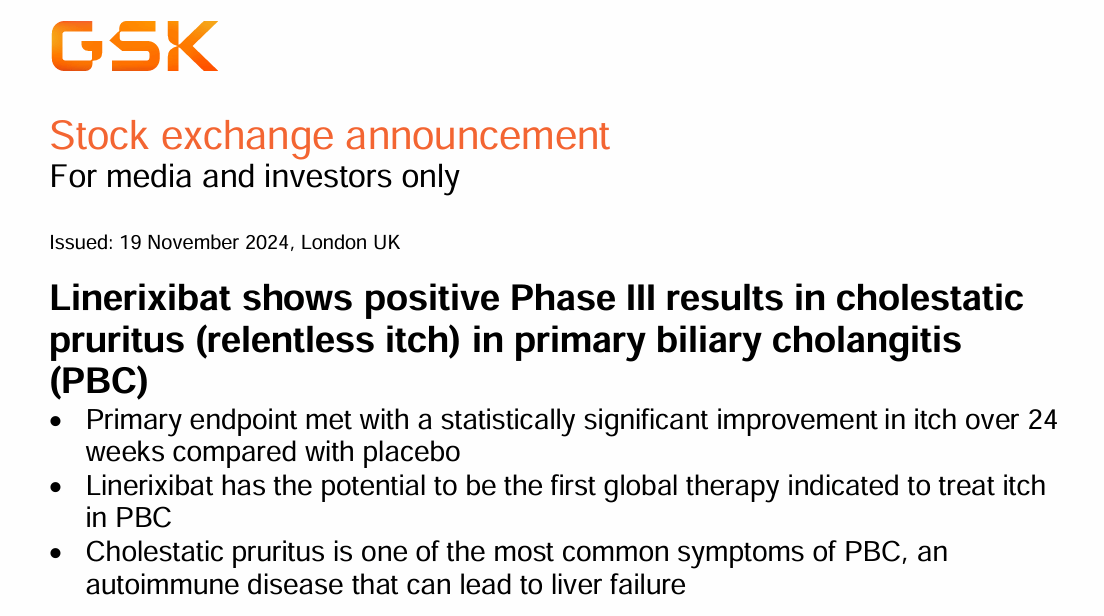
The results showed that the GLISTEN study met its primary endpoint, with patients in the Linerixibat treatment group experiencing significant improvement in pruritus symptoms, with a marked reduction in monthly pruritus scores compared to baseline over 6 months. Preliminary safety results were consistent with previous studies of Linerixibat. GSK will present detailed results from the study at upcoming medical conferences.
PBC is a rare biliary disease that primarily affects women. If left untreated, it can lead to liver damage or even liver failure. One of the most common symptoms is persistent, unbearable itching, along with fatigue, and nighttime pruritus often exacerbates fatigue. Currently, there is no cure for this disease. By 2030, it is projected that 510,000 people worldwide will be diagnosed with PBC, with more than 240,000 suffering from severe pruritus symptoms that require treatment, representing a significant unmet medical need. The therapies currently recommended in the guidelines for cholestatic pruritus are insufficient, with limited efficacy in relieving pruritus and poor tolerability.
Linerixibat is an oral IBAT inhibitor that works by inhibiting the reabsorption of bile acids, aiming to address cholestatic pruritus at its root cause. The U.S. FDA has granted Linerixibat orphan drug designation for the treatment of cholestatic pruritus associated with PBC. Kaivan Khavandi, Global Vice President and Head of Respiratory/Immunology R&D at GSK, said: “Linerixibat holds the potential to become the first global therapy developed specifically for treating PBC-related pruritus. These positive data suggest it may help improve the quality of life for patients who are severely impacted by persistent pruritus in multiple areas of their lives.”
 EN
EN
 Agricultural News
 Food News
 Industrial News
 Cosmetic News
 Pharmaceutical News
 Science News
