-
We detected your language preference as English. Would you like to switch to the English version for a better experience?
Switch to English
Stay here



Sodium bromide, a versatile compound with extensive industrial applications, is synthesized through a meticulous production process. This process is an indispensable part of the chemical manufacturing sector, involving several crucial steps and raw materials. Besides serving as a precursor for chemical synthesis, sodium bromide finds wide applications in various industries such as pharmaceuticals, petroleum and natural gas exploration, photography, and water treatment, highlighting the importance of understanding its complex production process from raw material procurement to step-by-step synthesis. This article delves into the in-depth research on how to make sodium bromide, revealing its significance and applications across different industries.
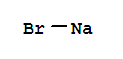
Sodium bromide, with the molecular formula NaBr, is an inorganic compound. It is a high melting point white crystalline solid similar to sodium chloride. Widely used as a source of bromide ions, it has various applications. How is sodium bromide formed? NaBr crystallizes with NaCl, NaF, and NaI in the same cubic lattice. Anhydrous salt crystallizes above 50.7℃, while dihydrate salt (NaBr·2H2O) crystallizes below 50.7℃ from an aqueous solution. What is the raw material of sodium bromide? NaBr is typically produced by treating sodium hydroxide with hydrogen bromide. How is sodium bromide made? Methods for preparing sodium bromide include neutralization, reduction, and ion exchange. The current main quality standard is the National Chemical Industry Department Standard HG/T 3809-2006, as shown in Table 1.

There are two methods depending on the raw materials used: one involves the reaction between sodium hydroxide and hydrobromic acid, while the other utilizes the reaction between sodium carbonate and hydrobromic acid. The reaction process is as follows (using NaOH as an example): Approximately 40% of hydrobromic acid is added to the reactor, followed by the slow addition of 40% sodium hydroxide solution under agitation to neutralize until reaching a pH of 7.5~8, resulting in sodium bromide. After evaporation, crystallization, and centrifugal separation, sodium bromide is obtained as the final product. The overall reaction equations are as follows: Method (1) HBr + NaOH → NaBr + H2O; Method (2) HBr + Na2CO3 → NaBr + H2O + CO2↑. Refer to Figure 1 for the process flow diagram (using NaOH as an example).

This process utilizes bromine and sodium carbonate as raw materials to synthesize sodium bromide in the presence of urea. The reaction equation is as follows:
3Br2 + 3Na2CO3 + CO(NH2)2 → 6NaBr + N2↑ + 4CO2↑ + H2O
Lin Junsheng first dissolves the soda ash and urea with continuous stirring, then adds bromine. Bromine is reduced to bromide ions, which combine with sodium ions in the solution to form sodium bromide. Carbonate ions in the solution react with urea, producing carbon dioxide and nitrogen gas, which then evaporate from the solution. The remaining substance is a water solution of sodium bromide, which is obtained after evaporation. Throughout the production process, the reaction temperature is maintained at around 80°C until completion, and the pH of the liquid is controlled at 6-6.5. Refer to Figure 2 for the detailed process flowchart.

The iron shavings reduction method involves the direct reaction of iron with bromine to produce ferrous bromide, followed by co-boiling with sodium carbonate. During this process, ferrous basic carbonate is produced as a byproduct, which upon boiling, transforms into colloidal compounds of ferrous and ferric iron, leading to a significantly slow filtration rate. To circumvent this drawback, the best approach is to add bromine in two portions, resulting primarily in the formation of iron oxide, thereby facilitating filtration and washing. The reaction is as follows:
Fe + Br2 → FeBr2
FeBr2 + Br2 → FeBr2·FeBr3
FeBr2·FeBr3 + Na2CO3 → NaBr + FeO·Fe2O3 + CO2
However, this process is complex and can lead to sodium bromide loss, reducing yield.

Researchers like An Lianying utilized the ion exchange method to produce sodium bromide. This method involves directly extracting sodium bromide from brine, with a crucial aspect being the effective separation of bromine and chlorine to reduce the chlorine content in the wash solution. Besides using non-chlorine-based rinsing agents, it's crucial to minimize the adsorption of chloride ions on the resin. However, it was observed that when a single resin separation was employed, the chloride content in the eluate remained relatively high. During the evaporation crystallization process, chlorine and bromine would simultaneously precipitate as a solid solution, making it challenging to obtain pure sodium bromide directly through evaporation crystallization. Therefore, a two-stage resin exchange process was devised. The first exchange involves chlorine gas oxidation and sodium hydroxide elution to achieve the initial separation of chlorine and bromine. In the second exchange, bromine undergoes the following reaction with the acidic eluate: 5Br^- + BrO3^- + 6H^+ = 3Br2 + 3H2O, directly converting to Br2. Sodium hydroxide is again used as the eluent for the second wash, and after the eluate is reduced, sodium bromide is obtained directly through evaporation. The process flowchart is illustrated in Figure 4.

For producers to successfully synthesize sodium bromide, understanding and paying attention to common pitfalls are necessary.
The production of sodium bromide requires specific reaction conditions. For instance, the urea reduction method requires an alkaline bath. Ignoring these conditions may lead to incomplete reactions or the formation of by-products.
Avoidance Method: Strictly follow the recipe, avoid altering reaction conditions, thoroughly read the reaction principles before experiments, and ensure understanding of the required conditions.
In sodium bromide synthesis, the ratio of reactants is crucial. Incorrect ratios may hinder reactions or produce by-products.
Avoidance Method: Precisely measure and prepare reactants using instruments such as electronic balances or burettes for accurate measurement and weighing.
Sodium bromide synthesis typically involves multi-step reactions. Failure to remove impurities may affect reactions or even cause failure.
Avoidance Method: Strictly control reaction conditions, remove impurities from reactants through recrystallization, distillation, etc.
Solvent selection also affects sodium bromide synthesis. For instance, bromine reacts with ethanol via substitution. Incorrect solvent selection may slow down or inhibit reactions.
Avoidance Method: Choose appropriate solvents, refer to literature or consult experts, or conduct solvent selection experiments.
Take 40wt%-45wt% NaOH solution as raw material, place 35-40wt% hydrobromic acid into a glass beaker, slowly add 0wt%-45wt% NaOH solution with constant stirring, neutralize to pH 7.5-8.0, and generate sodium bromide solution through the reaction.
Homemade sodium bromide, as a cost-effective alternative, serves as an effective disinfectant, neutralizing bacteria and algae in swimming pools. By incorporating homemade sodium bromide into routine pool maintenance, pool owners can maintain optimal water quality and ensure a safe and hygienic environment for swimmers. Its disinfection efficacy makes it a valuable asset in the pool maintenance product arsenal, providing a sustainable solution for maintaining pool cleanliness and attractiveness.
Sodium bromide finds applications in medical and pharmaceutical fields. Sodium bromide solution has been traditionally used to treat various diseases, including epilepsy and psychiatric disorders. Although its medical applications have diminished over time due to the development of alternative therapies, sodium bromide remains relevant in certain applications. In pharmaceutical settings, sodium bromide solution can be used as a reagent in chemical synthesis or as an additive in formulation processes. Precise control and manipulation of sodium bromide concentration enable pharmaceutical manufacturers to customize formulations to meet specific requirements, ensuring the efficacy and stability of medications.
Sodium bromide is also valuable in industrial processes, serving as a key component in various chemical processes. In industries such as petrochemicals, textiles, and water treatment, sodium bromide plays multiple roles from catalysts to corrosion inhibitors. It can promote specific chemical reactions or impart desired properties to materials, making it indispensable in industrial environments.
When considering sodium bromide solutions, there are distinct differences between homemade and commercial varieties. Homemade solutions offer cost-effectiveness as they typically involve readily available ingredients and simple preparation methods. This accessibility is attractive for individuals or small-scale operations aiming to reduce costs. However, homemade solutions may lack consistency in quality and purity, potentially leading to variations in performance and efficacy. Additionally, there are risks of improper measurement or contamination during production, which may impact the solution's effectiveness and safety.
Commercial sodium bromide solutions provide standardized quality and purity, ensuring reliability for applications such as water treatment or pharmaceutical manufacturing. Although commercial products may require higher upfront costs compared to homemade alternatives, their consistent quality and stringent manufacturing processes prove worthwhile for industries requiring precise formulations and performance. Furthermore, commercial suppliers typically offer technical support and certifications, further ensuring product reliability and regulatory compliance. The decision between homemade and commercial sodium bromide solutions depends on specific requirements of the application, balancing factors such as cost, quality, and regulatory standards.
With the emergence of innovative technologies and research trends in green chemistry, the future of sodium bromide synthesis is promising. One notable area of development is exploring new synthetic routes using sustainable and environmentally friendly processes. Researchers are investigating techniques such as electrochemical synthesis, enzyme catalysis, and flow chemistry to minimize waste generation, energy consumption, and harmful by-products associated with traditional methods. These advancements not only contribute to the sustainable development goals of the chemical industry but also provide opportunities for exploration and collaboration for DIY enthusiasts in chemical innovation. DIY enthusiasts can leverage online resources, open-access journals, and community forums to gather information and collaborate on innovative approaches to sodium bromide synthesis.
[1] Shen, Yan. "A Review of Sodium Bromide Preparation Technology." Jiangxi Chemical Industry, 2013, (02): 36-39. DOI:10.14127/j.cnki.jiangxihuagong.2013.02.074.
[2] https://en.wikipedia.org/wiki/Sodium_bromide
[3] https://patents.google.com/patent/CN103395806A/en
 |
 |
 |
 EN
EN
 Agricultural News
 Food News
 Industrial News
 Cosmetic News
 Pharmaceutical News
 Science News

 6YRS
6YRS