-
We detected your language preference as English. Would you like to switch to the English version for a better experience?
Switch to English
Stay here



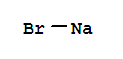
The chemical composition of sodium bromide mainly consists of sodium and bromine, with the Sodium bromide formula NaBr. Sodium bromide molecules can form insoluble sodium bromide salts with bromide ions in water, whereas sodium bromide in water is easily soluble with relatively high solubility. Hence, sodium bromide plays a significant role in the medical and dye industries. Sodium bromide has diverse applications, including trace determination of cadmium and manufacturing of bromides. It is utilized in photosensitive industries for preparing photosensitive solutions for films. In medicine, it's used in producing diuretics and sedatives. In the fragrance industry, it's employed in synthetic fragrance production. In the dyeing and printing industry, it serves as a brominating agent. Additionally, it finds usage in organic synthesis and other areas.
Sodium bromide appears as colorless cubic crystal system crystals or white granular powder. It is odorless, with a salty taste or slightly bitter taste. The relative sodium bromide density is 3.203g/cm3 (25℃), with sodium bromide melting point of 755℃ and sodium bromide boiling point of 1390℃. It absorbs moisture from the air forming clumps but does not deliquesce. It slightly volatilizes at high temperatures. What is the solubility of sodium bromide? The solubility of sodium bromide is approximately 1g in 1.1ml of water, about 16ml in ethanol, and 6ml in methanol. Its aqueous solution is nearly neutral, with a pH range of 6.5 to 8.0. Due to its high solubility in water (943.2 g/L or 9.16 mol/L at 25℃), its aqueous solution is neutral, which is a crucial factor for its widespread applications in the medical, fragrance, and dyeing industries. When using sodium bromide, its solubility in different solvents needs consideration to choose the appropriate solvent for reactions or usage.

A prominent feature of sodium bromide is its ability to undergo oxidation-reduction reactions, where it can act both as an oxidizing agent and a reducing agent. This property is particularly useful in chemical synthesis and manufacturing processes, where sodium bromide facilitates chemical transformations through electron transfer reactions. Additionally, sodium bromide is soluble in water, forming clear solutions, commonly employed in analytical chemistry and water treatment applications. Its solubility characteristics play a crucial role in its effectiveness in various industrial processes.
Various methods and techniques are available for identifying sodium bromide. (1) Infrared spectroscopy analysis can determine its chemical composition. (2) Raman spectroscopy technology can provide more accurate structural information about sodium bromide. (3) X-ray diffraction technology in experiments can provide insights into the crystal structure of sodium bromide. (4) Utilizing instrumental analysis of the chemical reaction products of sodium bromide can also offer valuable identification methods. For instance, chromatographic analysis can determine the composition and proportions of products when sodium bromide reacts with hydrobromic acid.
Due to its wide-ranging applications, sodium bromide holds significant importance in various industries. Sodium bromide is primarily known for its medicinal and photographic purposes, used in many industrial processes from pharmaceuticals to oil and natural gas exploration.
In the pharmaceutical industry, sodium bromide is a key ingredient in several medication formulations. Historically, it was used as a sedative and anticonvulsant, commonly employed in treating epilepsy and other neurological disorders. Its ability to sedate the central nervous system makes it valuable in psychiatric therapy as well. Although its medical applications have somewhat decreased over the years due to the adoption of safer alternatives, sodium bromide still finds usage in certain areas such as veterinary medicine, serving as an anticonvulsant for dogs and cats.
Another significant application of sodium bromide is in the field of photography. Sodium bromide plays a crucial role in the developing process. When mixed with silver nitrate, sodium bromide forms light-sensitive silver bromide crystals capable of capturing images when exposed to light. This process, known as the silver bromide gelatin process, revolutionized the photography industry, paving the way for modern photographic development techniques.
Sodium bromide finds extensive use in the oil and gas industry, particularly in drilling fluids. These fluids, also known as drilling muds, serve various purposes in drilling operations, including lubrication, cooling, and pressure maintenance. When sodium bromide is added to drilling fluids, it helps control viscosity and density, thereby enhancing efficiency in extracting oil and gas from underground reservoirs.
Sodium bromide also boasts diverse other industrial applications. It serves as a precursor for synthesizing other bromine compounds used in flame retardants, water treatment chemicals, and pharmaceuticals. Additionally, sodium bromide is utilized in manufacturing specialty chemicals such as dyes and pigments, as well as serving as a disinfectant in water treatment facilities.
Sodium bromide is a chemical substance widely used in industrial production. However, it poses certain hazards to human health and the environment.
Sodium bromide exhibits some level of toxicity to the human body. Contact with sodium bromide may cause irritation to the eyes, skin, and respiratory tract. In case of contact with eyes or skin, immediate rinsing with water is necessary. Exposure to large amounts of sodium bromide can lead to severe poisoning, even life-threatening. However, the toxicity of NaBr is very low, with an estimated oral LD50 in rats of 3.5 g/kg. Nevertheless, this is a single-dose value. Bromide ions are cumulative toxins with a relatively long half-life (over one week in humans).
Sodium bromide also has an impact on the environment. Pouring it into water bodies may degrade water quality and even pollute groundwater. Additionally, sodium bromide can disrupt the soil's pH balance, affecting plant growth.
Certain safety measures need to be taken when handling sodium bromide. Here are some safety guidelines for dealing with sodium bromide:
(1) When handling sodium bromide, proper personal protective equipment such as goggles, gloves, and protective clothing should be worn.
(2) Follow safe operating procedures when handling sodium bromide to avoid direct skin contact. In case of accidental contact, immediately wash with soap and water.
(3) Store sodium bromide sealed and keep it in a dry, cool, well-ventilated area.
(4) Avoid pouring sodium bromide into water bodies while handling it to prevent environmental pollution.
Comparing sodium bromide and potassium bromide reveals their unique characteristics and applications. These two compounds have similarities in chemical composition as they are composed of bromide ions combined with sodium ions or potassium ions. However, their differences lie in their reactivity and solubility. Compared to potassium bromide, sodium bromide typically exhibits higher solubility in water, making it more suitable for applications requiring aqueous solutions. On the other hand, potassium bromide is often favored for its unique reactivity in certain chemical reactions. In pharmaceutical formulations, potassium bromide is commonly used as an antiepileptic medication, while sodium bromide finds usage in the photography and water treatment industries.
Sodium bromide is a solid compound primarily used in aqueous solutions or as solid reagents in chemical processes. In contrast, hydrobromic acid exists as a gas at room temperature, mainly used in gas-phase reactions or as solutions in organic solvents. Sodium bromide is renowned for its applications in photography, medicine, and water treatment, whereas hydrobromic acid is often utilized as a precursor in synthesizing various organic compounds and serves as a catalyst in certain chemical reactions. Despite the differences, both compounds play crucial roles in industrial processes and scientific research, contributing to advancements across various fields.
The multifaceted nature of sodium bromide shines through its myriad applications across industries from pharmaceuticals to photography. As we conclude this exploration, we urge action to fully harness the potential of sodium bromide in addressing contemporary challenges and driving innovation. By delving deep into its characteristics and applications, researchers and industry professionals can discover new avenues for its utilization, paving the way for progress in different domains.
[1] Shen, Y. (2013). Overview of sodium bromide preparation process. Jiangxi Chemical Industry, (02), 36-39. DOI:10.14127/j.cnki.jiangxihuagong.2013.02.074.
[2] Peng, C., & Tang, J. (2004). Research on the treatment of sodium bromide wastewater by electrodialysis. Water Treatment Technology, (01), 19-21. DOI:10.16796/j.cnki.1000-3770.2004.01.006.
[3] Qian, L., & Ji, Z. (2002). Research on the production process of medicinal sodium chloride and sodium bromide. Su and Salt Science and Technology, (02), 1-2. DOI:10.19465/j.cnki.2095-9710.2002.02.001.
[4]https://en.wikipedia.org/wiki/Sodium_bromide
[5]https://pubchem.ncbi.nlm.nih.gov/compound/Sodium-Bromide
 |
 |
|
|
|
 |
 EN
EN
 Agricultural News
 Food News
 Industrial News
 Cosmetic News
 Pharmaceutical News
 Science News

 6YRS
6YRS

