-
We detected your language preference as English. Would you like to switch to the English version for a better experience?
Switch to English
Stay here




Sodium bromide (NaBr) is an ionic compound that consists of sodium (Na?) cations and bromide (Br?) anions. It is a colorless, crystalline solid that dissolves readily in water, forming a neutral solution. Sodium bromide is widely used in chemical, pharmaceutical, and industrial applications due to its unique properties, including its ionic nature and high solubility in water.
One notable characteristic of sodium bromide is its polarity. While the molecule as a whole is neutral, the interaction between the sodium ion and bromide ion creates an ionic bond, leading to the compound's polar nature. But what is polarity, and how does it influence the behavior of sodium bromide?
Polarity refers to the distribution of electrical charge within a molecule or compound. In chemistry, a molecule is polar if there is an uneven sharing of electrons or if ions with different charges interact. For covalent bonds, this occurs due to a difference in electronegativity between bonded atoms. In ionic compounds, such as sodium bromide, polarity arises from the attraction between positively charged cations and negatively charged anions.
Is nabr polar or nonpolar? The strength of ionic bonds depends on the charge and size of the ions involved. In sodium bromide, the sodium ion (Na?) has a low electronegativity, while the bromide ion (Br?) is more electronegative, resulting in a strong ionic bond. This polarity affects the compound's solubility, conductivity, and reactivity, making sodium bromide a versatile substance in various fields.
Is nabr polar or nonpolar? To understand the polarity of sodium bromide, we analyze its ionic structure and the electronegativity difference between sodium and bromine.
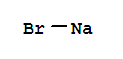
Ionic Structure: Sodium bromide consists of a linear arrangement of ions, with the sodium ion donating an electron to the bromide ion. This transfer creates a strong electrostatic force of attraction, forming a highly stable ionic compound.

Electronegativity Difference: The electronegativity of sodium is 0.93, while bromine has an electronegativity of 2.96. This large difference (2.03) confirms the ionic character of sodium bromide, as the bromine atom gains the shared electron, becoming the more electronegative center of the compound.

Thus, sodium bromide is classified as a polar ionic compound. Its polarity is responsible for its high solubility in water, where the ions dissociate completely, and its utility in various industrial processes.
| Sodium Bromide | |
| Molecular formula | NaBr |
| Molecular shape | Linear |
| Relative molecular mass | 102.89 g/mol |
| Solubility | H2O:1 Mat 20 °C |
| Melting point | 755 °C |
| Boiling point | 1390 °C |
| Compound | Polarity | Applications |
| Sodium Chloride (NaCl) | Ionic compound; highly polar due to the electrostatic interaction between Na? and Cl? ions. | Widely used as table salt, in food preservation, and in industrial processes. |
| Potassium Bromide (KBr) | Ionic compound; highly polar due to the electrostatic interaction between K? and Br? ions. | Used in photography, infrared spectroscopy, and as a sedative in medicine. |
After exploring the polarity chemistry of NaBr, have you gained a deeper understanding of whether it is "polar or nonpolar"? While NaBr as a molecule is polar, this does not necessarily mean that all of its bonds are polar bonds. If you're interested in similar compounds or related supply chain resources, Guidechem offers a comprehensive list of global Sodium Bromide?suppliers, where you can find the right procurement plan to meet your research and production needs.
 |
|
 |
|
|
 |
 EN
EN
 Agricultural News
 Food News
 Industrial News
 Cosmetic News
 Pharmaceutical News
 Science News

 6YRS
6YRS

