-
We detected your language preference as English. Would you like to switch to the English version for a better experience?
Switch to English
Stay here



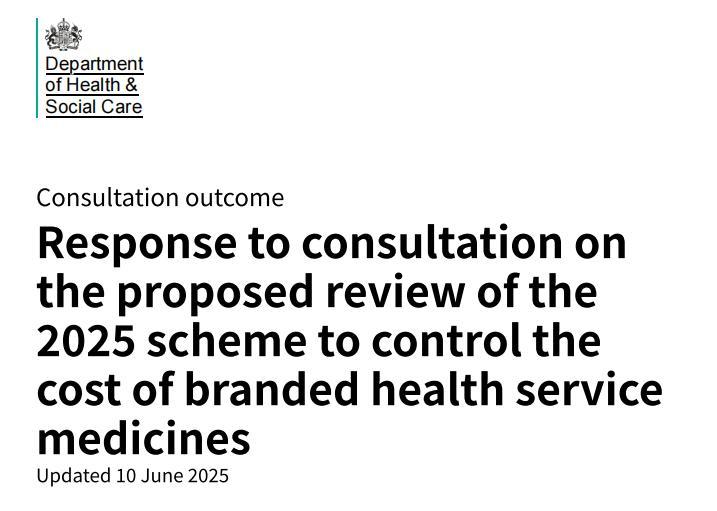
Despite strong objections from the biopharmaceutical industry, the U.K. government is moving forward with plans to maintain high rebate rates under its statutory drug pricing scheme. Following a public consultation period, the government confirmed that drugmakers will be required to pay a 31.3% rebate on sales of branded medicines during the second half of 2025.
This new figure is slightly reduced from the originally proposed 32.2% rate, but still represents a sharp increase from the 15.5% rate applied during the first half of 2025. The full-year average rebate rate will settle at 23.4%.
The U.K. regulates drug spending through two separate programs: the statutory scheme and the voluntary scheme. According to the government, the new rate was calculated to "maintain broad commercial equivalence" between the two programs. Drug manufacturers are required to choose one of these schemes.
While the government argues that the slight adjustment reflects updated sales data through Q4 2024, the biopharmaceutical industry remains critical. As Richard Torbett, Chief Executive of the Association of the British Pharmaceutical Industry (ABPI), stated:The UK’s sky-high and unpredictable payment rates send a terrible message to international investors at a time when the UK is trying to position life sciences research and development as an engine for health and growth.
Torbett added:We urge the government to chart a clear path to reverse the UK’s historic underinvestment in medicines, through meaningful changes to both the Voluntary Scheme and Statutory Scheme.
The ABPI emphasized that the U.K.'s statutory rebate rate greatly exceeds those of its European peers. For example, Germany imposes a 7% rebate rate and France 5.7%. These countries dedicate a larger share of their healthcare spending to pharmaceuticals—17% and 15%, respectively—compared to just 9% in the U.K.
A WPI Economics report commissioned by the ABPI warned that maintaining rebate rates above 20% could cost the U.K. approximately £11 billion ($14.9 billion) in lost R&D investment by 2033. In contrast, reverting to pre-2023 rebate levels below 10% could generate a £61 billion boost to GDP and £20 billion in additional tax revenue over the next 30 years.
The public comment period, which concluded in April, revealed strong industry resistance: 80% of respondents opposed the initial proposal. More than half expressed concerns that the pricing controls would negatively impact their operational scale and workforce.
Still, the government defended its decision, stating that it does not believe the changes will introduce uncertainty and asserting that the U.K.remains a suitable early launch market.Nonetheless, acknowledging industry feedback, the Secretary of State has committed to an accelerated review of the voluntary scheme, aiming to complete it by June 2025 instead of the usual autumn timeframe.
The government indicated it will consider adjusting the statutory scheme following the voluntary scheme's review to maintain commercial balance. Because no changes are expected to the voluntary scheme this year, the government views immediate statutory scheme adjustments as necessary.
In addition to the 2025 rate, the U.K. government has released headline rebate rates for future years: 24.3% in 2026 and 26% in 2027. These figures are each 0.4 percentage points lower than previously proposed and may be revised depending on the outcome of the voluntary scheme review.
The debate around U.K. drug pricing comes amid broader international pressure, notably from the United States. As part of its "most favored nation" initiative, the U.S. is seeking to narrow the cost disparity between American and international drug prices. This includes encouraging other nations to increase drug spending.
At the recent Goldman Sachs annual global healthcare conference, Pfizer CEO Albert Bourla noted that the U.S. spends approximately 0.8% of GDP per capita on innovative drugs within the first ten years of their launch, compared to just 0.3% in the U.K. U.S. officials including Commerce Secretary Howard Lutnick, Trade Representative Jamieson Greer, and Treasury Secretary Scott Bessent are reportedly incorporating drug pricing discussions into trade negotiations.
 EN
EN
 Agricultural News
 Food News
 Industrial News
 Cosmetic News
 Pharmaceutical News
 Science News
