-
We detected your language preference as English. Would you like to switch to the English version for a better experience?
Switch to English
Stay here



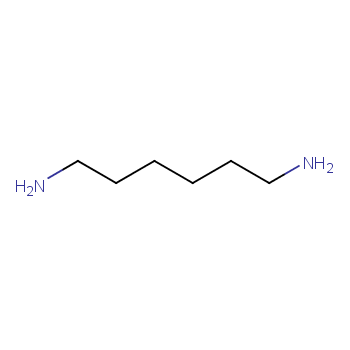
On April 20th, Asahi Kasei Functional Materials (Lianyungang) Co., Ltd. announced that starting from May 1, 2025, the spot price for hexamethylenediamine (HMDA) will be adjusted to $3,236.08 per ton, including VAT. This price is applicable only to contracts based on the International Commercial Terms (Incoterms) FCA (Lianyungang Factory) and those affiliated with Asahi Kasei. Compared to April, the price of hexamethylenediamine will increase by $274.34 per ton, reflecting the tension in the global supply chain.

Hexamethylenediamine (HMDA), also known as 1,4-dicyanobutane, is primarily used in the production of hexamethylenediamine, which in turn is used to produce Nylon 66. The price increase directly impacts the cost of downstream products. Notably, it can be observed from the industrial chain that its upstream raw material, Adiponitrile, has long been in an oligopolistic market structure. Although China has gradually resolved the "bottleneck" problem of hexanediamine production, it remains heavily reliant on imports.
Among global producers, Invista of the United States is the market leader, holding 53.3% of the market share in 2022, followed by Asahi Kasei from the United States and BASF from Germany, with market shares of 18.5% and 11.4%, respectively.

Data shows that China's demand for hexanediamine has been continuously increasing, rising from 250,100 tons in 2019 to 371,200 tons in 2022. However, domestic production of hexanediamine is still far from meeting market needs, resulting in a large supply-demand gap, with high dependence on imports.
Raw Material Prices Surge by $301.79/Ton!
Recently, another product facing a price surge is boric acid. Data shows that boric acid prices have rapidly increased from $932.79 per ton at the beginning of the month to $1,234.58 per ton, a rise of more than 30%. Major Chinese producers such as Qingdao Huayi Zhong, Shandong Zhongxian Yuehong, and others have adjusted their prices to $1,234.58 per ton. Even more noteworthy, companies like Zibo Honggui East, Zibo Yihong, and Baozhen Chemical have suspended external price quotes, and the market sentiment remains strongly bullish.

The fluctuation in boric acid prices is driven by multiple factors, including changes in market supply and demand, transportation cost fluctuations, tariff policy adjustments, and differences in corporate marketing strategies. On the supply side, although China has some production capacity for boric acid, with a total capacity of around 300,000 to 400,000 tons per year, the actual annual output is only around 200,000 to 300,000 tons. Meanwhile, China's annual demand for boric acid is as high as 500,000 to 600,000 tons, meaning domestic production can only meet 50%-60% of the demand, with the remainder relying on imports.
The global boric acid supply market is highly concentrated, with Turkey, the United States, and Chile accounting for the vast majority of the world's production. Major boric acid exporting countries like Turkey are affected by potential tariff policies between China and the US, leading to a reduction in import sources, and tightening the domestic supply of boric acid. Environmental restrictions continue. In major production areas like Qinghai and Shandong, some enterprises have reduced their operating rates or halted production for rectification due to environmental supervision and safety checks, further squeezing domestic production capacity.
Recently, news of price hikes has been all over the media. Due to tariff policies, the production costs of many chemical raw materials are rising. Many upstream raw material supplies have shrunk or even stopped, bringing various shocks to the chemical industry. For many products that rely on raw material imports, production costs will rise rapidly. In the current global industrial chain, which is highly interconnected, any change at one node can trigger a chain reaction throughout the entire network. For many enterprises, this is undoubtedly a severe test. The rise in costs may compress profit margins and even affect the survival and development of businesses. Therefore, enterprises need to closely monitor market trends and prepare for risk alerts and response measures in advance.
 |
|
|
 EN
EN
 Agricultural News
 Food News
 Industrial News
 Cosmetic News
 Pharmaceutical News
 Science News

 2YRS
2YRS

