
Soda Ash vs Washing Soda: Are They Different?
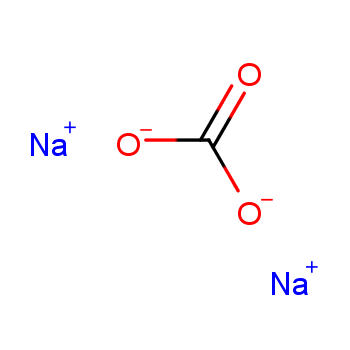
Soda ash, with the chemical formula Na2CO3 and CAS number 497-19-8, is the anhydrous (without water) form of sodium carbonate. It's a white, powdery substance used in various industrial processes.
Washing soda, also known as sodium carbonate decahydrate (Na2CO3·10H2O), is a hydrated (containing water) form of sodium carbonate. It contains ten water molecules for each sodium carbonate molecule.
Soda ash and washing soda are chemically very similar. The key difference between soda ash vs washing soda is the presence of water molecules in washing soda. Soda ash is anhydrous sodium carbonate (Na2CO3), while washing soda is the decahydrate (Na2CO3·10H2O).
Synthesis of Soda Ash and Washing Soda
Elemental Composition and Structural Overview
- Soda ash is composed of sodium (Na), carbon (C), and oxygen (O), with its chemical formula being Na2CO3. Its structure consists of sodium ions (Na+) and carbonate ions (CO32-), which are held together by ionic bonds, giving it its characteristic properties.
- Washing soda has the same basic composition as soda ash (Na, C, and O), but it also includes hydrogen (H) and oxygen (O) from the water molecules (H2O) incorporated into its crystal structure.
Synthesis Methods
- Soda ash is primarily produced through the Solvay process, which involves reacting sodium chloride (salt) with ammonia, carbon dioxide, and water. It can also be mined from naturally occurring deposits of trona.
- Washing soda can be produced by hydrating soda ash, which involves dissolving soda ash in water and allowing it to crystallize. The crystals that form incorporate water molecules into their structure, creating washing soda (sodium carbonate decahydrate).
The soda ash vs washing soda comparison highlights that washing soda is simply a hydrated form of soda ash. Chemically, they're based on the same sodium carbonate compound.
Applications: Soda Ash vs Washing Soda
While soda ash and washing soda share the same core component (sodium carbonate), the presence of water molecules in washing soda leads to differences in their properties and, consequently, their typical applications. This section delves deeper into the distinct applications of soda ash and washing soda.

Soda Ash: Predominantly Industrial Applications
Soda ash, being the anhydrous form of sodium carbonate, is primarily utilized in large-scale industrial processes where its higher concentration and reactivity are advantageous. Its key applications include:
- Glass Manufacturing: This is one of the largest uses of soda ash globally. It acts as a flux, lowering the melting point of silica sand and making it easier to form glass products such as bottles, jars, window panes, and fiberglass.
- Chemical Manufacturing: Soda ash is a crucial ingredient in the production of a wide range of chemicals. It is used to manufacture sodium silicates (used in detergents and adhesives), sodium phosphates (used in water treatment and detergents), and various other sodium compounds used in industrial processes.
- Detergent Production (Industrial Scale): While washing soda is used in household laundry, soda ash is used in the industrial production of detergents and soaps. It functions as a builder, improving the cleaning power of surfactants by softening water and maintaining the proper pH for cleaning.
- Metallurgy and Metal Refining: Soda ash is employed in various metallurgical processes, including aluminum production and steelmaking. It is used as a flux to remove impurities and improve the efficiency of these processes.
- Flue Gas Desulfurization: Soda ash is used in some power plants and industrial facilities to remove sulfur dioxide (SO2) from flue gases, reducing air pollution. This process is known as flue gas desulfurization (FGD).
Washing Soda: Primarily Household and Consumer Applications
Washing soda's hydrated nature and milder alkalinity make it more suitable for direct use in household settings. Its key applications include:
- Laundry: Washing soda is an effective laundry booster, helping to remove tough stains like grease, dirt, and food stains. It works by softening water, which allows detergents to work more effectively. It also helps to increase the pH of the wash water, further enhancing cleaning power. However, it should not be used on delicate fabrics like silk or wool.
- Household Cleaning: Washing soda can be used to clean a variety of surfaces around the house, including sinks, tubs, tiles, and ovens. It is effective at removing grease, grime, and soap scum. It can also be used to unclog drains. Again, it is important to exercise caution when using it on certain surfaces.
- Water Softening (Household Scale): Washing soda can be added to laundry water or used in other household applications to soften hard water by precipitating minerals like calcium and magnesium.
- pH Adjustment: Washing soda's alkaline nature makes it useful for adjusting the pH of certain solutions. It can be used in gardening to raise the pH of acidic soil.
Conclusion
While the soda ash vs washing soda distinction highlights different primary areas of use, it's crucial to emphasize that washing soda can be derived from soda ash (by adding water). Due to its stronger alkalinity, concentrated soda ash should only be handled by professionals with proper protective equipment. For household use, washing soda is the safer and more convenient option. It's recommended to consult product instructions and safety guidelines before using either compound.
In summary, soda ash and washing soda are based on the same chemical compound, sodium carbonate (Na2CO3). The key difference is that washing soda is the decahydrate (Na2CO3·10H2O), meaning it contains water molecules within its crystal structure. This difference in hydration affects their physical properties and primary applications. Soda ash is mainly used in industrial processes, while washing soda is more commonly used for household cleaning and laundry. The discussion of soda ash vs washing soda therefore is primarily a discussion of anhydrous vs hydrated sodium carbonate.
Disadvantages and Considerations of Soda Ash and Washing Soda
| Consideration |
Soda Ash |
Washing Soda |
| Handling |
Can be irritating to skin and eyes in concentrated form. |
Also irritating to skin and eyes, though generally milder than anhydrous soda ash. |
| Environmental Impact |
Large-scale production can have environmental impacts (e.g., related to the Solvay process). |
Relatively environmentally friendly when used for household purposes. |
If you're looking to purchase these compounds, Guidechem is your go-to platform for sourcing high-quality raw materials and reliable suppliers. With our extensive global network, we connect you to a wide range of Soda Ash suppliers and Washing Soda suppliers, ensuring you find the right products to meet your specific research or production requirements. Whether you're in pharmaceuticals, food additives, or other industries, Guidechem simplifies the sourcing process, offering verified supplier information, competitive pricing, and seamless communication.
References
[1] Kirk-Othmer Encyclopedia of Chemical Technology. John Wiley & Sons. (This is a general, widely respected chemical encyclopedia and a good starting point for chemical information).
[2] Ullmann's Encyclopedia of Industrial Chemistry. Wiley-VCH. (Another comprehensive reference for industrial chemical processes and information).
[3] National Center for Biotechnology Information (NCBI). PubChem Database. (PubChem is a valuable resource for chemical information, including properties and structures).
[4] The Solvay Process. (Information can be found on various chemical engineering websites and textbooks detailing the Solvay process).
[5] Chemistry of Water Treatment by Samuel D. Faust and Osman M. Aly. (This book could provide more information on water softening applications).
[6] Various Material Safety Data Sheets (MSDS) or Safety Data Sheets (SDS) for Sodium Carbonate (Soda Ash) and Sodium Carbonate Decahydrate (Washing Soda). (These sheets provide safety information and handling precautions).




 EN
EN
 Agricultural News
 Food News
 Industrial News
 Cosmetic News
 Pharmaceutical News
 Science News

 1YR
1YR

