-
We detected your language preference as English. Would you like to switch to the English version for a better experience?
Switch to English
Stay here



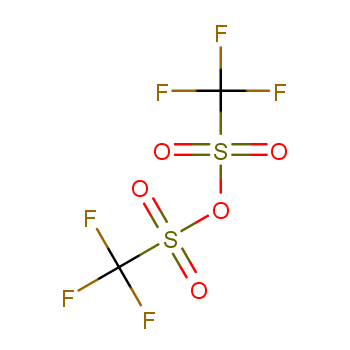
Trifluoromethanesulfonic anhydride (Tf2O) remains one of the most strategically sensitive fluorinated intermediates in pharmaceutical, electronic chemical, and advanced organic synthesis markets. In 2026, buyers are increasingly benchmarking not only purity specifications, but also impurity profiles, moisture stability, and supplier audit transparency to reduce reaction failure risks and optimize procurement ROI.

In the global Tf2O market, reliability extends far beyond CAS No. 358-23-6 consistency. Modern pharmaceutical and electronic-material manufacturers increasingly evaluate suppliers based on impurity spectrum control, moisture stability, packaging technology, and trace-metal contamination profiles.
Historically, premium international brands such as Sigma Aldrich and TCI established market trust through stringent analytical documentation, inert-gas packaging systems, and highly standardized batch reproducibility. Sigma Aldrich currently markets Trifluoromethanesulfonic Anhydride at 99% assay purity with documented moisture-sensitive handling protocols and Quality Level 200 classification. TCI specifies purity above 98.0% with refrigerated inert-gas storage requirements and detailed regulatory shipping information.
However, the 2026 sourcing landscape has evolved dramatically. Several Chinese fluorochemical manufacturers now produce Tf2O with comparable GC purity levels (>99.0%), water content below 100 ppm, and sulfur-containing impurity control suitable for advanced API synthesis. The difference increasingly lies in process consistency and documentation transparency rather than simple purity labels.
Guidechem's Verified Suppliers ecosystem has become especially important for identifying these “hidden champions.” Instead of relying exclusively on brand recognition, procurement managers can now benchmark:
One major challenge in Tf2O procurement is hydrolysis sensitivity. Even trace atmospheric exposure can degrade reagent activity, generating triflic acid and impacting downstream reaction selectivity. Several laboratory users have publicly noted that packaging quality directly affects long-term reagent stability.
“High-purity Tf2O is no longer rare. The real differentiator in 2026 is moisture management during storage and logistics. A supplier with strong inert packaging and rapid shipping often outperforms a nominally ‘higher purity’ competitor.” — Dr. Michael Brenner, Fluorination Process Consultant, Germany
Tf2O specifications differ significantly depending on the end-use application. Choosing the wrong grade can lead to catalyst poisoning, reduced reaction conversion, discoloration, or complete synthesis failure.
The market is generally divided into three commercial categories:
The most commercially requested specification remains Trifluoromethanesulfonic Anhydride 99%. However, experienced chemists understand that assay purity alone is insufficient. Two hidden variables determine actual reaction performance:
Because Tf2O reacts violently with moisture, water content exceeding 300–500 ppm can dramatically reduce reaction selectivity in moisture-sensitive catalytic systems. Premium electronic-grade materials may specify water content below 50 ppm.
Color stability is also increasingly monitored in pharmaceutical GMP environments. Slight yellowing often indicates decomposition or contamination caused by prolonged storage exposure.
Guidechem's advanced filtering system provides procurement teams with a major efficiency advantage. Instead of manually reviewing thousands of supplier listings, buyers can filter by:
This capability significantly shortens supplier qualification cycles, especially for R&D organizations requiring rapid reagent validation.
Expert Commentary: One of the most overlooked risks in Tf2O sourcing is color drift during warehouse storage. Buyers should request accelerated stability data at elevated temperatures, particularly when sourcing from regions with long shipping routes. In high-value pharmaceutical synthesis, a failed batch caused by degraded Tf2O can easily exceed the entire annual procurement budget difference between suppliers.
The global Tf2O market remains highly sensitive to fluorochemical feedstock volatility. In 2025–2026, pricing fluctuations have been heavily influenced by:
Sigma Aldrich's retail pricing currently ranges from approximately USD 60 for 5 g laboratory packs to over USD 2,000 for multi-kilogram packaging.
However, industrial B2B procurement operates under entirely different economics. Bulk contract pricing varies significantly depending on:
Guidechem's “Get Price” functionality has become increasingly valuable under inflationary conditions because it allows buyers to collect multiple supplier quotations in real time. Procurement teams can rapidly benchmark:
This transforms the platform from a passive listing directory into an active sourcing intelligence engine.
“Fast RFQ turnaround is becoming a competitive advantage in fluorochemical procurement. Buyers who secure inventory quickly during feedstock spikes can reduce annual sourcing volatility by double-digit percentages.” — Sarah Lin, Senior Fluorochemical Market Analyst, Asia-Pacific
In practice, experienced sourcing managers increasingly use multi-supplier quote comparisons to negotiate flexible pricing corridors rather than fixed annual pricing.
Purchasing Tf2O in bulk introduces additional compliance and logistics complexity because the material is classified as moisture-sensitive and corrosive hazardous cargo.
Modern integrated B2B marketplaces such as Guidechem reduce procurement risk by centralizing critical compliance workflows.
A professional Tf2O sourcing process typically includes the following stages:
TCI and Sigma Aldrich both emphasize inert-gas storage requirements and refrigerated handling recommendations because Tf2O rapidly hydrolyzes upon moisture exposure.
Guidechem simplifies this process by allowing buyers to directly access supplier documentation before final order confirmation. This transparency is particularly valuable for international buyers navigating:
In 2026, procurement departments increasingly favor platforms capable of integrating supplier verification, quotation management, and logistics coordination into a single workflow. This reduces procurement cycle time while minimizing compliance risk.
The 2026 Tf2O procurement landscape is no longer defined solely by premium Western laboratory brands. Today’s buyers must evaluate suppliers based on a broader matrix including impurity control, moisture stability, packaging engineering, logistics responsiveness, and compliance transparency.
The most effective sourcing strategy can be summarized as:
Benchmark global quality standards + leverage marketplace intelligence to identify cost-efficient verified suppliers.
Platforms such as Guidechem now provide procurement teams with a complete operational toolkit:
For pharmaceutical, fluorochemical, and electronic-material manufacturers seeking stable long-term supply chains, combining technical due diligence with intelligent marketplace sourcing has become essential for maximizing procurement ROI.
Q1: Why is water content critical in Trifluoromethanesulfonic Anhydride procurement?
Tf2O reacts rapidly with moisture, generating triflic acid and reducing reagent activity. Excessive water content can significantly lower reaction selectivity and negatively affect pharmaceutical synthesis yields. High-end applications often require water content below 100 ppm.
Q2: Are Chinese Tf2O suppliers reliable in 2026?Several Chinese fluorochemical manufacturers now provide Tf2O quality comparable to international premium brands, particularly in purity and moisture control. Buyers should verify supplier audits, COA history, and packaging standards through trusted sourcing platforms before approval.
Q3: What documents should buyers request before placing bulk Tf2O orders?Buyers should request SDS documents, Certificates of Analysis (COA), ISO certifications, hazardous shipping documentation, moisture specifications, and recent batch analytical reports before confirming procurement contracts.
[1]. Sigma Aldrich. “Trifluoromethanesulfonic anhydride, 99%, CAS 358-23-6.” Product Documentation and Technical Specifications, 2026.
[2]. TCI Chemicals. “Trifluoromethanesulfonic Anhydride Product Specifications and Safety Documentation.” TCI America Technical Data Sheet, 2026.
[3]. Ouyang, Y. et al. “Trifluoromethanesulfonic Anhydride as a Low-Cost and Versatile Trifluoromethylation Reagent.” Angewandte Chemie International Edition, 57(23), 6926–6929 (2018).
[4]. CAS Registry Number 358-23-6. Chemical Abstracts Service (CAS), American Chemical Society.
[5]. UN3265 Hazardous Materials Transport Classification, U.S. Department of Transportation (DOT), 2026.
[6]. Sigma Aldrich Safety Data Sheet Revision 6.18, December 2025. TSCA compliance guidance for Trifluoromethanesulfonic Anhydride solutions.
Looking for stable, high-purity Trifluoromethanesulfonic Anhydride with full regulatory compliance? Discover why leading global brands choose our premium supply chain solutions.
|
 |
 |
 |
 |
 |
 EN
EN
 Agricultural News
 Food News
 Industrial News
 Cosmetic News
 Pharmaceutical News
 Science News

 5YRS
5YRS


Expert Commentary: Procurement teams should avoid evaluating Tf2O suppliers solely by headline purity values. In real production environments, hydrolysis resistance, low sulfate impurity levels, and packaging engineering directly influence reaction yield reproducibility. Suppliers capable of maintaining moisture levels below 50–100 ppm during international transportation often generate lower total process costs despite slightly higher unit pricing. Experienced sourcing managers increasingly request three consecutive COAs before approving bulk vendors.