-
We detected your language preference as English. Would you like to switch to the English version for a better experience?
Switch to English
Stay here



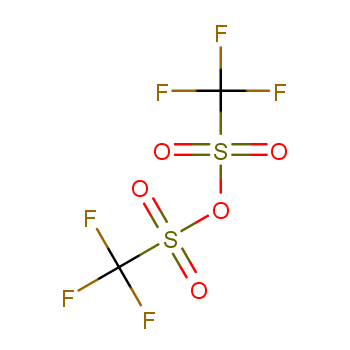
Trifluoromethanesulfonic anhydride (CAS 358-23-6), commonly known as Tf2O or triflic anhydride, is a highly reactive Class 8 corrosive reagent widely used in pharmaceutical and advanced fluorination synthesis. This guide explains supplier verification, compliance documentation, hazardous logistics, packaging integrity, and digital procurement protocols for laboratories and industrial buyers in 2026.

For highly reactive fluorinated reagents such as Trifluoromethanesulfonic Anhydride (Tf2O), supplier verification extends far beyond confirming business registration. Procurement teams in pharmaceutical, CDMO, and specialty chemical sectors must evaluate whether a supplier possesses the regulatory infrastructure required to manufacture, store, and export a Class 8 corrosive substance under UN 3265 classification.
A verified supplier should demonstrate compliance with ISO 9001 quality management systems, hazardous chemical operation permits, and documented experience handling moisture-sensitive electrophilic reagents. Since Tf2O reacts violently with water and generates corrosive acidic decomposition products, suppliers lacking corrosion-control expertise may introduce substantial safety and quality risks.
In 2026, global buyers increasingly prioritize suppliers capable of providing complete traceability, batch-specific analytics, and validated hazardous materials logistics support. Market reports indicate rising demand from pharmaceutical intermediates and glycosylation chemistry sectors, particularly in Asia-Pacific CDMO manufacturing hubs.
For international procurement, Tf2O shipments require a complete compliance dossier to prevent customs delays, warehouse quarantine, or rejected dangerous goods declarations. The minimum documentation package should include a recent SDS, Certificate of Analysis (COA), transport classification declaration, and export compliance statements.
The COA is particularly critical because Tf2O purity directly impacts downstream triflation efficiency and stereoselective synthesis performance. Most pharmaceutical-grade material specifies purity ≥98.0% to ≥99.0%, with density around 1.67 g/cm3 at 25°C and boiling point between 81–83°C.
Cross-border shipments increasingly require End User Certificates (EUCs) or dual-use declarations due to tighter controls on reactive fluorinated intermediates. Laboratories should verify that the CAS number 358-23-6 is consistently referenced across all documents to eliminate ambiguity caused by shorthand names such as “Tf2O” or “triflic anhydride.”
“Missing batch-specific COAs remain one of the leading causes of laboratory quarantine during inbound inspection of fluorinated reagents.” — Elena Fischer, Regulatory Logistics Auditor, European Fine Chemicals Association.
Trifluoromethanesulfonic Anhydride is generally transported under UN 3265 as a corrosive acidic organic liquid, classified as Hazard Class 8 and Packing Group II. Both IATA and IMDG regulations impose strict segregation rules due to the material’s violent hydrolysis reaction with water and incompatibility with alkaline substances.
Air freight shipments face tighter quantity limits and higher DG surcharges than ocean freight. In 2026, hazardous shipping premiums for fluorinated corrosive chemicals increased significantly due to revised IMDG handling fees and airline restrictions on reactive electrophilic reagents.
Density-weight correlation also influences logistics cost calculations. Tf2O has a density of approximately 1.67–1.68 g/cm3, meaning relatively small package volumes can rapidly exceed airline weight thresholds. Procurement departments frequently underestimate this hidden logistics premium when comparing suppliers solely on FOB pricing.
Expert Commentary: “The biggest logistics mistake buyers make with Tf2O is treating it like a standard laboratory reagent. In reality, it behaves more like a reactive process intermediate. Always request humidity-controlled secondary packaging and verify whether the freight forwarder has certified DG handling capability for corrosive fluorinated liquids.”
Tf2O is an extremely powerful electrophilic reagent with strong affinity toward moisture and nucleophilic contaminants. Improper packaging can trigger hydrolysis, pressure buildup, corrosion, or purity degradation before the material even reaches the laboratory.
Leading suppliers typically use fluorinated HDPE bottles, amber ampoules, or PTFE-lined stainless steel containers to minimize chemical attack on packaging surfaces. Secondary containment often incorporates desiccants or nitrogen blanketing to prevent atmospheric moisture ingress during international transport.
Packaging validation is therefore an indirect indicator of supplier competence. Buyers should inspect whether seals remain intact, whether desiccant systems are included, and whether containers display visible corrosion resistance certification.
Online procurement of Tf2O has expanded rapidly through B2B chemical marketplaces and specialized laboratory reagent platforms. However, laboratories must recognize that hazardous reagent e-commerce still operates within strict legal and regulatory frameworks.
Many jurisdictions now require institutional verification, laboratory registration, or hazardous chemical user declarations before an online order can be fulfilled. Procurement teams should always search and validate products using the exact CAS No. 358-23-6 rather than relying solely on abbreviations like “Tf2O.”
Incorrect synonym matching remains a major source of procurement errors, especially when dealing with highly reactive fluorinated reagents. Digital purchasing systems should integrate CAS-based validation protocols into ERP or laboratory procurement workflows.
In 2026, laboratories increasingly favor suppliers offering electronic SDS delivery, digital COA verification, and serialized batch traceability. These digital compliance systems reduce customs friction while improving audit readiness for GMP environments.
Q1: Why is Trifluoromethanesulfonic Anhydride classified as hazardous cargo?
Tf2O reacts violently with water and causes severe skin and eye corrosion. It is classified under UN 3265 as a Class 8 corrosive liquid and requires dangerous goods handling procedures during storage and transportation.
Q2: What purity level is recommended for pharmaceutical synthesis?
Most pharmaceutical and glycosylation applications require Tf2O purity between 98.0% and 99.0%, supported by batch-specific COAs and moisture-controlled packaging.
Q3: Can Tf2O be shipped together with alkaline chemicals?
No. Tf2O must be segregated from alkaline substances and water-containing materials because of its strong electrophilic and corrosive behavior.
Q4: What packaging is best for long-term storage?
PTFE-lined containers, fluorinated HDPE bottles, and inert-gas protected packaging systems provide the best long-term stability for moisture-sensitive Tf2O.
[1]. International Maritime Organization (IMO). IMDG Code Amendment 42-24, Dangerous Goods Shipping Regulations, 2026.
[2]. IATA Dangerous Goods Regulations (DGR), 67th Edition, 2026.
[3]. CAS Registry Number 358-23-6, Trifluoromethanesulfonic Anhydride Chemical Database.
[4]. Haz-Map Occupational Exposure Database: Trifluoromethanesulfonic Anhydride Hazard Profile.
[5]. Sigma-Aldrich and ChemicalBook Safety Data Sheets for Trifluoromethanesulfonic Anhydride, revised 2025–2026.
[6]. BAC Reports. “Trifluoromethanesulfonic Anhydride (CAS 358-23-6) Market Research Report 2026.”
[7]. OECD Test Guidelines 201, 202, and 203 for aquatic toxicity evaluation of corrosive fluorinated chemicals.
Looking for stable, high-purity Trifluoromethanesulfonic Anhydride with full regulatory compliance, hazardous logistics support, and moisture-protected packaging? Discover why leading pharmaceutical and specialty chemical companies rely on our global supply solutions.
 |
|
 |
 |
 |
 |
 EN
EN
 Agricultural News
 Food News
 Industrial News
 Cosmetic News
 Pharmaceutical News
 Science News

 5YRS
5YRS


Expert Commentary: “In today’s fluorination reagent market, the cheapest Tf2O supplier is rarely the safest long-term sourcing partner. Procurement teams should prioritize suppliers with validated inert filling systems and hazardous export expertise. One rejected DG shipment can erase an entire quarter’s procurement savings.” — Dr. Michael Renner, Fluorination Process Consultant, 18 years in API manufacturing.