-
We detected your language preference as English. Would you like to switch to the English version for a better experience?
Switch to English
Stay here



Sodium thiosulfate, also known as sodium hyposulfite or "hypo," with the chemical formula Na2S2O3·5H2O, finds extensive application in multiple industries including industrial, agricultural, medical, and environmental sectors. It is soluble in water but insoluble in alcohol, exhibiting diverse applications. When do you use sodium thiosulfate? This article will discuss the uses and properties of sodium thiosulfate.
Sodium thiosulfate is a crucial chemical compound with widespread applications in industries ranging from chemical synthesis, biochemistry, wastewater treatment, mineral separation, papermaking, to photography. What are the common uses of sodium thiosulfate? Sodium thiosulfate serves as a dyeing, bleaching, and purifying agent (such as thiosulfate-based dyes like Bunte salts), and it finds applications in electroplating, water purification, leather tanning, as well as in the chemical industry as a reducing agent, dechlorinating agent for bleached cotton fabrics, sulfur dyeing agent for dyeing woolen fabrics, anti-bleaching agent for indigo dyes, pulp dechlorinating agent, detergent, disinfectant, and bleach in the pharmaceutical industry. It serves as a desulfurizing agent for automobile exhaust gases, wastewater treatment, and treatment of sulfur-containing compounds in waste treatment.
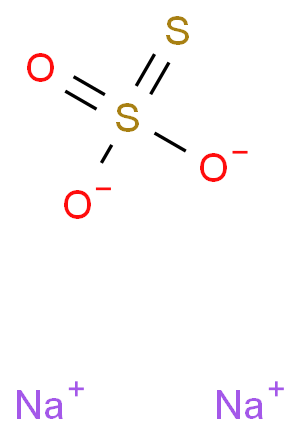
In the thiosulfate ion, the central sulfur atom and the central sulfur atom in the sulfate ion are equivalent, with oxidation states of +6 and -2 for the coordinated sulfur atoms, respectively. Thiosulfate ions are stable in alkaline solutions or in crystalline alkali metal thiosulfates. Thiosulfate ions have a tetrahedral structure. The S-S bond length is 201.3±0.3 pm, and the S-O bond length is 146.8±0.4 pm. These bond lengths imply the presence of some degree of S-Sπ bonding and S-Oπ bonding properties.

Cyanide is a highly toxic compound that disrupts cellular respiration, leading to rapid and severe physiological damage. In the treatment of cyanide poisoning, sodium thiosulfate can rapidly combine with free cyanide ions present in the body or those bound to methemoglobin, forming thiocyanate, a less toxic compound that can be excreted from the body. This reaction mitigates the effects of cyanide poisoning by reducing the concentration of cyanide in the blood, thereby restoring cellular respiration and preventing further damage.
Research suggests that intravenous injection of sodium thiosulfate can delay vascular calcification and hardening in patients undergoing hemodialysis, with a relatively high safety profile in long-term treatment. Calcification refers to the abnormal deposition of calcium salts in tissues, resulting in hardening or stiffening of the affected areas. In certain medical conditions such as calcific uremic arteriolopathy or calciphylaxis, excessive calcification can lead to tissue necrosis and significant morbidity. Sodium thiosulfate is believed to exert its therapeutic effects by chelating calcium ions, thereby inhibiting the formation of calcium deposits. By disrupting the calcification process, sodium thiosulfate provides a promising treatment option for patients with calcification-related diseases, potentially improving prognosis and quality of life.
In addition to the aforementioned medical uses, sodium thiosulfate is being widely explored for other medical purposes, such as co-administration with cisplatin for treating locally advanced non-metastatic solid tumors to prevent ototoxicity. Sodium thiosulfate, as a detoxifying and calcification treatment agent, has been FDA-approved for reducing cisplatin-induced hearing loss in children. Sodium thiosulfate is also used in the treatment of complications associated with cancer chemotherapy, as well as for the treatment of skin diseases such as scabies and ringworm. Furthermore, as an antioxidant, it can be used in pharmaceuticals to extend the shelf life of drugs and slow down discoloration.
The greatest potential application of sodium thiosulfate is yet to be fully explored. Research has shown it to be an anti-inflammatory agent. Chronic neuroinflammation is closely associated with various neurodegenerative diseases, including Alzheimer's disease (AD) and Parkinson's disease (PD). Currently, over 20 published epidemiological studies indicate a significantly reduced risk of developing AD in individuals known to take anti-inflammatory drugs or suffering from conditions such as arthritis that routinely use anti-inflammatory drugs.
Sodium thiosulfate plays a crucial role as a dechlorinating agent in the water treatment process. Chlorine is commonly used to disinfect water, but residual chlorine can be harmful if not promptly neutralized. What happens when sodium thiosulfate is added to water? Sodium thiosulfate reacts with chlorine to form harmless chloride ions and sulfate ions, effectively neutralizing chlorine.
In wastewater treatment, sodium thiosulfate is an integral part of the detoxification process. Wastewater typically contains various pollutants, including heavy metals, which can pose serious environmental and health risks if not properly treated. So, what is the role of sodium thiosulfate? Sodium thiosulfate facilitates the removal of heavy metals by forming stable complexes with them, promoting their precipitation or subsequent removal through filtration or sedimentation processes, thus aiding in the removal of heavy metals. By effectively detoxifying wastewater, sodium thiosulfate helps protect aquatic ecosystems and public health.
What is sodium thiosulfate used for in pools? In pool maintenance, sodium thiosulfate is commonly used to neutralize excess chlorine after shock treatment. Shock treatment involves adding large amounts of chlorine to the pool to eliminate bacteria, algae, and other contaminants. However, the residual chlorine levels after treatment may still be high, posing risks to swimmers and equipment. Sodium thiosulfate rapidly reduces the excess chlorine levels, restoring the pool water to a safe and comfortable recreational environment. Its use in pool maintenance ensures that swimmers can enjoy clean and properly disinfected water without the risk of chlorine-related irritation or discomfort.
In the photography industry, sodium thiosulfate is used in photographic fixing. In this process, sodium thiosulfate acts as a fixing agent, neutralizing unexposed dyes in the photograph, making the image clearer and brighter. Meanwhile, its high stability and corrosion resistance ensure the long-term preservation and durability of photographs. Its various salts such as hexahydrated sodium thiosulfate are used as rubber vulcanization aids and sensitizers, and sodium thiosulfate compounds are generally included in photographic gelatin to increase the photosensitivity of photographic emulsions, serving as a fixing agent in the photography industry.
In the textile industry, sodium thiosulfate is used to remove excess dyes from textiles. Dyes are widely used in textile processing, but excess dye can affect the color and quality of the fabric. Sodium thiosulfate can quickly dissolve and wash away excess dyes from textiles. This method is not only convenient and fast but also avoids potential pollution to the environment by using other chemicals.
Sodium thiosulfate can also be used as a setting agent for insulation materials and water reducing agents. Sodium thiosulfate can improve the content and dissolution rate of sulfate ions in cement. When compounded with polycarboxylate water reducers, it can improve the adaptability of water reducers.
An important property of sodium thiosulfate is its reducibility, with an oxidation-reduction potential of:
S4O62-+2e-→2S2O32-E=0.090V
Thus, it is a moderately strong reducing agent. Thiosulfates can be oxidized to sulfates by oxygen, ozone, chlorine, or hydrogen peroxide. Therefore, when performing electrochemical oxidation of sodium thiosulfate, it is important to introduce protective gases such as nitrogen or helium to avoid interference from oxygen.
Sodium thiosulfate is commonly used as a titrant for the oxidation of selenium sulfide in the mixed acid, and excess oxidants are decomposed with urea. In sulfuric acid medium, starch is used as an indicator, and sodium thiosulfate is titrated with selenium. It can also be used to determine the content of sorbitol.
In the precipitation analysis of metal ions, sodium thiosulfate can be used to detect trace metal ions. Its key role in analysis is that sodium thiosulfate can react with metal ions to form precipitates. This reaction is divided into two stages: A. Metal ions combine with sodium thiosulfate to form slightly soluble small complexes; B. Visible precipitates form within a certain period. Therefore, by observing the formation and disappearance of precipitates, we can infer the concentration of metal ions in the sample.
Due to the sensitive reaction of sodium thiosulfate with metal ions, even trace amounts of metal ions can be detected. Therefore, sodium thiosulfate has important application value in trace metal ion analysis.
Sodium thiosulfate finds application in environmental remediation efforts, providing a universal solution for treating various pollutants and toxins. In environmental remediation, sodium thiosulfate is commonly used to neutralize hazardous chemicals such as heavy metals, cyanides, and certain pesticides. Its ability to form stable complexes with these pollutants aids in their removal from soil, water, and other environmental matrices. Sodium thiosulfate also assists in detoxifying industrial wastewater and contaminated sites, aiding in the restoration of ecosystems and safeguarding public health. As an effective environmental remediation agent, sodium thiosulfate plays a critical role in addressing pollution challenges and promoting sustainable environmental management practices.
Sodium thiosulfate provides environmental solutions across various industries, fostering sustainable development and reducing environmental impact. As a non-toxic, biodegradable compound, sodium thiosulfate can replace more hazardous chemicals in industrial processes, reducing pollution risks and minimizing harm to ecosystems. For example, its use in wastewater treatment helps mitigate the environmental impact of industrial activities by facilitating the safe and efficient removal of pollutants. The role of sodium thiosulfate in pool maintenance, agriculture, and other applications underscores its potential to support sustainable practices by minimizing the use of harmful substances and promoting natural resource conservation. Adopting sodium thiosulfate as an environmentally friendly alternative aligns with efforts to achieve ecological balance and protect the planet for future generations.
Due to its versatility and effectiveness, sodium thiosulfate is widely used in various industries and applications. However, when handling sodium thiosulfate, it is essential to observe safety precautions to prevent accidents and minimize risks. Since sodium thiosulfate is typically sold in powder or crystal form, wearing gloves and protective eyewear is crucial to avoid skin and eye irritation. Adequate ventilation should be maintained in areas where sodium thiosulfate is used or stored to prevent inhalation of dust particles. When mixing sodium thiosulfate with other chemicals or solutions, it is important to follow recommended guidelines and avoid contact with incompatible substances to prevent hazardous reactions. By adhering to these safety measures, individuals can ensure the safe and effective handling of sodium thiosulfate in various practical applications.
Sodium thiosulfate emerges as a versatile and indispensable compound in numerous industries. Its abilities as a dechlorinating agent, detoxifying agent, and reducing agent underscore its importance in addressing various challenges and promoting sustainable practices. By facilitating the safe development of photographs, ensuring clean water supplies, providing life-saving interventions in medical emergencies, and supporting environmentally friendly solutions, sodium thiosulfate plays a crucial role in modern society. By responsibly harnessing the multifunctionality of sodium thiosulfate, individuals and industries can continue to benefit from its myriad applications while minimizing environmental impact and ensuring safety.
[1] https://www.jneurology.com/articles/medical-uses-of-sodium-thiosulfate.html
[2] Niu, M. (2022). Kinetics of Sodium Thiosulfate Electrooxidation on Polycrystalline Gold Electrode and the Effect of Sulfate Ion. China University of Mining and Technology. DOI:10.27623/d.cnki.gzkyu.2022.001704.
 |
 |
 |
 |
 |
|
 EN
EN
 Agricultural News
 Food News
 Industrial News
 Cosmetic News
 Pharmaceutical News
 Science News

 6YRS
6YRS

