-
We detected your language preference as English. Would you like to switch to the English version for a better experience?
Switch to English
Stay here



Sodium thiosulfate is a compound with significant multifunctionality, playing crucial roles in various industries due to its unique properties and wide applications. In this article, we embark on a journey to unveil the multifaceted nature of sodium thiosulfate, exploring its key roles in photography, medicine, wastewater treatment, and beyond. Throughout our exploration, we delve into its critical properties, including its boiling point, melting point, and density, which form the basis of its efficacy in different applications. Understanding these fundamental characteristics allows us to gain insight into how sodium thiosulfate facilitates advancements in modern technology and enhances daily life.
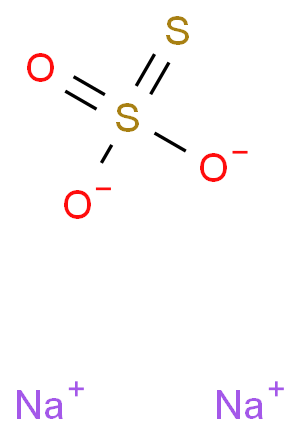
Sodium thiosulfate, an inorganic sodium salt, consists of sodium and thiosulfate ions in a 2:1 ratio. It serves as an antidote to cyanide poisoning, a renal protectant, and an antifungal medication. Sodium thiosulfate holds significant importance in the industrial sector, finding applications in the preparation of drugs and photographic developers. In the medical field, it is commonly used as an antidote and a drug to mitigate chemotherapy side effects. In the photography industry, sodium thiosulfate serves as a fixing agent for silver-based films. Additionally, it is utilized as a dechlorinator and titrant for iodometric titration, extensively applied in the water treatment industry. Sodium thiosulfate is obtained from sodium sulfite and sulfur dioxide or from waste sodium sulfide used in dye manufacturing. Its structural formula is as follows:
Sodium thiosulfate, also known as hypo, is a white solid with a molecular weight of 158.11. It has sodium thiosulfate density of 1.01 g/mL at 25°C, a sodium thiosulfate melting point of 48°C, and a sodium thiosulfate boiling point of 100°C. It is stored at 2-8°C. This compound finds extensive applications in various industries such as photography, industrial, and medical fields.
The sodium thiosulfate boiling point is 100°C, and its melting point is 48°C, allowing it to remain stable over a wide temperature range, playing crucial roles in specific applications. For instance, in processes like tanning leather, electroplating, water purification, and mineral extraction, its melting and boiling point characteristics enable its application at high temperatures.
Sodium thiosulfate is soluble in water but insoluble in alcohol. This solubility property allows sodium thiosulfate to be utilized in certain liquid applications. For example, it can be used for bleaching paper, cotton fabrics, etc., providing milder bleaching effects compared to bleaching agents like hydrogen peroxide. This versatility contributes to its widespread applications in industries and medicine.

The boiling point refers to the temperature at which a substance, under a certain pressure, can be heated to the point of boiling while maintaining its liquid-vapor equilibrium state. In chemical reactions, the boiling point of a substance is typically considered the temperature at which it can undergo chemical reactions under specific pressure. Therefore, for sodium thiosulfate, an inorganic compound, studying its boiling point is essential for exploring its chemical properties and reaction mechanisms. Several factors influence the boiling point of sodium thiosulfate, including pressure and solvent properties.
(1) Pressure: An increase in pressure generally leads to a rise in boiling point because the repulsive forces between liquid molecules increase, requiring more energy for molecules to overcome their interactions. This phenomenon applies similarly in chemical reactions, where higher pressure often stabilizes sodium thiosulfate, thereby increasing its boiling point.
(2) Solvent: Sodium thiosulfate exhibits different boiling points in different solvents, depending on the affinity of solvent molecules for its molecules and the solvent's structure. For example, it has high solubility in water but low solubility in alcohol. Hence, the influence of solvents on the boiling point of sodium thiosulfate needs to be considered in various reaction systems.
In terms of chemical properties, the melting point refers to the temperature at which a substance begins to melt. This property has crucial implications for certain applications of sodium thiosulfate, such as in the photography industry as a fixing agent, industrial applications as a reducing agent, and medical applications in treating chemotherapy side effects.
Sodium thiosulfate, with a chemical formula of Na2S2O3·5H2O, has a stable structure with a melting point of 48°C. In the photography industry, sodium thiosulfate is utilized as a fixing agent, requiring it to function at specific temperatures. If the melting point of sodium thiosulfate is too low, it might prematurely melt during the photography process, leading to insufficient exposure time and unclear photos. Conversely, if the melting point is too high, it might melt too late during the photography process, resulting in excessively dark photos. Therefore, the melting point of sodium thiosulfate significantly influences its usability in the photography industry, with both too high and too low melting points affecting its effectiveness.
In medical and industrial applications, sodium thiosulfate is widely used for detoxifying cyanide poisoning and treating chemotherapy side effects, where its reducing properties reduce substances like chlorine gas. However, if the melting point of sodium thiosulfate is too high, it may take longer to melt during detoxification and treatment processes, prolonging operation time and affecting the efficacy of drugs. Conversely, if the melting point is too low, it may melt prematurely during operations, impacting the effectiveness of drugs. Thus, the melting point of sodium thiosulfate is also crucial for medical and industrial applications.
Density is a physical quantity that represents the ratio of an object's mass to its volume, commonly applied in various fields such as agriculture, industrial production, and selection. For sodium thiosulfate (Na2S2O3), its density is 0.968 grams per cubic centimeter.
In the manufacturing process of sodium thiosulfate (Na2S2O3), precise density testing is crucial. Due to the high stability of sodium thiosulfate, it decomposes when reacting with dilute acids, necessitating strict control of its density during production. Additionally, in fields like photography, water treatment, and the development of silver-based films, the density of sodium thiosulfate holds significant guiding significance.
In different application fields, sodium thiosulfate has different density standards. For instance, in the photography industry, the density of sodium thiosulfate is an essential parameter for photographic film development. Meanwhile, in water treatment, the density of sodium thiosulfate reflects its ability to remove impurities and purify water quality.
In photography, sodium thiosulfate, known as a fixing agent and "hypo," serves as a hypo solution for dissolving silver halides, such as AgBr, in photographic emulsions. It is used in film and paper processing. For this application, ammonium thiosulfate is usually preferred over sodium thiosulfate. The ability of thiosulfate to dissolve silver ions is related to its ability to dissolve gold ions.
Outside the darkroom, sodium thiosulfate also finds its place in the medical field, particularly renowned for its detoxifying properties, serving as a life-saving therapy for cyanide poisoning. By forming complexes with cyanide, sodium thiosulfate aids in its detoxification, offering a beacon of hope in severe medical emergencies. Sodium thiosulfate is used to treat cyanide poisoning and is listed in the World Health Organization's Essential Medicines List. Other uses include local treatment of ringworm and pityriasis versicolor, as well as treating some side effects of hemodialysis and chemotherapy. In September 2022, the Food and Drug Administration (FDA) approved sodium thiosulfate under the trade name Pedmark to reduce the risk of ototoxicity and hearing loss in infants, children, and adolescents receiving chemotherapy with cisplatin.
In the realm of environmental sustainability, sodium thiosulfate emerges as a preferred choice. Its ability to react with chlorine in wastewater treatment plants helps prevent harm to the environment. Additionally, it aids in detoxifying wastewater, ensuring cleaner waterways and healthier ecosystems.
The precise properties of sodium thiosulfate hold a significant place in analytical chemistry. As a titrant, it aids in determining the concentration of various substances, particularly in iodometric titrations. Its role in precipitating metal ions underscores its importance in laboratory environments, aiding in accurate measurements and analyses.
Surprisingly, sodium thiosulfate also appears in hair care products. As a neutralizer in hair relaxers, it helps maintain the desired texture while minimizing damage to hair follicles. Its inclusion in such products highlights its multifunctionality beyond traditional applications.
Apart from the aforementioned industries, sodium thiosulfate finds utility in a range of other applications. From assisting in removing excess dyes in the textile industry to facilitating chlorine removal in paper pulp, its uses are limitless. Even in metal processing, sodium thiosulfate can remove excess silver from surfaces, demonstrating its broad application scope.
In this comprehensive article, we delve into the intricate details of sodium thiosulfate, revealing its key properties and extensive applications. Our exploration begins with examining the melting point, boiling point, and density of sodium thiosulfate, laying the foundation for a deeper understanding of its behavior and uses. Through meticulous analysis, we elucidate how these physical properties influence the multifunctionality and effectiveness of the compound across various industries. From fixing agents in photography to life-saving applications in medicine, sodium thiosulfate stands as a cornerstone of modern technology and innovation. Join us in unraveling the multifaceted nature of sodium thiosulfate and its indispensable contributions to various fields.
[1] https://en.wikipedia.org/wiki/Sodium_thiosulfate#Production
[2] https://pubchem.ncbi.nlm.nih.gov/compound/24477
[3] He, J., Wang, A., Gong, W., et al. (2020). Influence Factors on the Concentration of Standard Sodium Thiosulfate Solution. Chlor-Alkali Industry, 56(02), 29-30.
[4] Yao, X., Wang, A., Gong, W., et al. (2018). Influence Factors on the Accuracy of Determination Value of Standard Sodium Thiosulfate Solution. Shandong Chemical Industry, 47(12), 72+75. DOI:10.19319/j.cnki.issn.1008-021x.2018.12.028.
[5] He, J. (2017). Stability and Calibration of Standard Sodium Thiosulfate Solution. Shandong Chemical Industry, 46(07), 112-114. DOI:10.19319/j.cnki.issn.1008-021x.2017.07.038.
[6] Shen, D. (1998). Production of Industrial Sodium Thiosulfate from Waste Sulfurized Dyes Wastewater. Jiangsu Chemical Industry, (06), 39-40.
 |
 |
|
 |
 |
|
 EN
EN
 Agricultural News
 Food News
 Industrial News
 Cosmetic News
 Pharmaceutical News
 Science News

 6YRS
6YRS

