-
We detected your language preference as English. Would you like to switch to the English version for a better experience?
Switch to English
Stay here




Antifreeze is a liquid added to water to prevent freezing and protect systems from damage. In cold weather, regulating engine temperature and preventing freezing are crucial. Antifreeze serves a dual purpose - lowering the freezing point of liquids in the cooling system and raising the boiling point of water. This helps maintain fluidity and prevent freezing in cold weather conditions, as well as prevent any overheating issues. There are mainly two types of antifreeze: one is non-toxic propylene glycol, which is very suitable for use around pets and children; the other is ethylene glycol, most commonly used for vehicles. Choosing the right antifreeze is important because different antifreezes can provide varying degrees of freeze protection and compatibility with specific cooling systems.
Propylene glycol is a viscous, colorless liquid with almost no odor but a faint sweet taste. Its chemical formula is CH3CH(OH)CH2OH. Classified as a diol because it contains two alcohol groups. It is miscible with various solvents, including water, acetone, and chloroform. Generally, diols are non-irritating and have low volatility. The structural formula of propylene glycol is as follows:
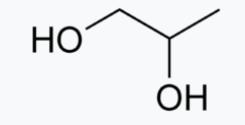
Propylene glycol is primarily produced on a large scale for polymer production. In the EU, it is assigned an E-number E1520 for food applications. Its cosmetic and pharmacological number is E490. Propylene glycol is also present in propylene glycol alginate (known as E405). It is recognized as a GRAS (Generally Recognized as Safe) compound by the FDA under 21 CFR x184.1666 and approved by the FDA as an indirect food additive for certain uses. In the US and Europe, propylene glycol has been approved as a carrier for topical, oral, and some intravenous medications.
Ethylene glycol (IUPAC name: ethane-1,2-diol) is an organic compound with the molecular formula (CH2OH)2. It is mainly used for two purposes, as a raw material for polyester fiber production and in antifreeze formulations. It is a tasteless, colorless, flammable, viscous liquid. It has a sweet taste but is toxic at high concentrations. This molecule has been observed in outer space. The structural formula of ethylene glycol is as follows:
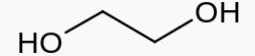
Both pure forms of ethylene glycol and propylene glycol are colorless liquids. However, different colors may be encountered depending on their applications:
(1) Ethylene Glycol: Typically colored for various reasons, such as safety (to differentiate it from other liquids) or to indicate the type of additive in the coolant solution. Automotive ethylene glycol antifreeze can be green, pink, or orange depending on the manufacturer.
(2) Propylene Glycol: Food-grade propylene glycol is usually colorless, but some industrial varieties may have a slight yellow or green color.
The main difference between propylene glycol and ethylene glycol lies in their toxicity levels. Propylene glycol is very low in toxicity, which is why it is also present in cosmetics and personal care products, whereas ethylene glycol is toxic and must be handled with care to limit any human or animal exposure.
(1) Ethylene Glycol: Highly toxic when ingested to both animals and humans. Can be fatal. Classified as a hazardous substance.
(2) Propylene Glycol: Lower toxicity. Safe for accidental contact and ingestion in small amounts. Recognized as a Generally Recognized as Safe (GRAS) food additive by the FDA.
(1) Ethylene Glycol: Biodegradable by bacteria but relatively quickly. If leaked, it will deplete oxygen in the water during breakdown.
(2) Propylene Glycol: Also biodegradable but slower than ethylene glycol. This means it takes longer to break down and requires more oxygen in water.
There are differences in the physical properties of propylene glycol and ethylene glycol. At the same percentage, propylene glycol solutions have higher viscosity and higher freezing points than ethylene glycol, resulting in lower thermal efficiency, especially at lower temperatures. Propylene glycol is also more expensive than ethylene glycol.
To illustrate this point, compare the characteristics of 50% volume propylene glycol and ethylene glycol. The freezing point of 50% propylene glycol is -31°F, while the freezing point of 50% ethylene glycol is -36°F. The viscosity of propylene glycol solution is 96 centipoise at -10°F, while ethylene glycol is 27 centipoise at the same temperature. This means ethylene glycol can be used at temperatures approximately 20 degrees lower than propylene glycol.
(1) Ethylene Glycol: More corrosive. Corrosion inhibitors need to be added to prevent damage to metal components in the system.
(2) Propylene Glycol: Less corrosive. Generally considered non-toxic and non-corrosive, making it a better choice for applications with accidental contact with food or coolants.
(1) Ethylene and propylene glycol have different fluid, toxicity, and heat transfer characteristics, and mixing them can hinder your system from functioning properly.
(2) Due to differences in molecular formula, mixing two different types or brands of ethylene glycol can decrease corrosion resistance, disrupt solution concentration, which may make you susceptible to freezing temperatures.
(3) Mixing sometimes can lead to unexpected chemical reactions or the formation of precipitates, thereby clogging the system. Mixing often leads to issues with both the system and the glycol itself, as mixing can cause separation, which then forms gels, clogging filters and strainers, causing damage to the system.
Comparing ethylene glycol with propylene glycol, the main differences lie in toxicity levels and performance efficiency. Ethylene glycol has superior heat transfer performance due to higher viscosity and higher boiling point, while propylene glycol has lower toxicity. Ethylene glycol is typically used in engine and industrial high-temperature heat transfer applications. Propylene glycol is common as an engine coolant in applications involving environmental exposure and toxicity. The density and heat transfer capabilities of propylene glycol as a coolant differ from ethylene glycol, as it relates to transferring heat from the engine to the cooling system when properly mixed with pure water.
Other major differences between these products include:
(1) Ethylene glycol is more efficient as a coolant compared to propylene glycol. Propylene glycol-based products require more antifreeze to reach the same freezing point.
(2) Ethylene glycol has excellent heat transfer efficiency due to lower viscosity, but because propylene glycol has a higher specific heat, more fluid must circulate to transfer the same amount of energy.
(3) Due to its higher viscosity, propylene glycol increases pump head loss in circulating systems.
(4) While propylene glycol is less toxic than ethylene glycol, it takes longer to biodegrade.
(5) Ethylene glycol should not be used in places where there is a chance of contact with drinking water or food processing systems or environmentally sensitive areas.
(6) Both products have low flammability and are not considered carcinogens.
The use of propylene or ethylene glycol depends on the application and the risk of accidental contact with food, drinking water, or human ingestion. For example, in aircraft deicing, propylene glycol is used to both clear ice and contaminants from aircraft and to actively prevent snow and ice buildup during winter and snowfall. It also exists in many supermarket antifreeze products. Ethylene glycol will be used in closed systems and controlled industrial applications.
In this article, we have delved into the common antifreeze agents, ethylene glycol, and propylene glycol, analyzing their characteristics, advantages, disadvantages, and scenarios of use. Choosing the right antifreeze is crucial for protecting vehicles, pipelines, and equipment for normal operation in cold environments. By understanding the properties and uses of ethylene glycol and propylene glycol, we can choose the appropriate antifreeze according to specific needs and environmental conditions to ensure the normal operation and prolong the service life of equipment. In future selection processes, we should consider various factors comprehensively and make wise decisions.
[1] https://en.wikipedia.org/
[2]https://www.monarchchemicals.co.uk/Information/News-Events/700-/The-difference-between-Propylene-Glycol-and-Ethylene-Glycol-in-antifreeze
[3] https://www.alsglobal.com/en/News-and-publications/2022/06/esource-134---Ethylene-Glycol-Based-Coolants
[4] https://bvthermal.com/2017/07/13/important-tips-when-using-glycol-in-your-chiller/
[5] https://goglycolpros.com/blogs/ask-the-pros/can-i-mix-propylene-glycol-and-ethylene-glycol
[6] https://www.dynalene.com/propylene-glycol-vs-ethylene-glycol/
 |
 |
 |
 |
 |
 |
 EN
EN
 Agricultural News
 Food News
 Industrial News
 Cosmetic News
 Pharmaceutical News
 Science News

 1YR
1YR


