-
We detected your language preference as English. Would you like to switch to the English version for a better experience?
Switch to English
Stay here



Phthalic anhydride is a crucial industrial chemical that undergoes various reactions, playing a key role in the production of many materials. To fully grasp the applications of phthalic anhydride, understanding its chemical behavior is essential. This paper delves into the reactivity of phthalic anhydride, examining how it interacts with other substances to form valuable products. We will elucidate its tendencies towards reactions such as hydrolysis (interaction with water) and esterification (reaction with alcohols), both of which are foundational in creating diverse materials. Through analyzing these reactions, we will gain a deeper understanding of the versatility and significance of phthalic anhydride in the chemical industry.
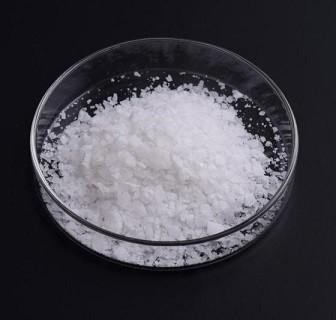
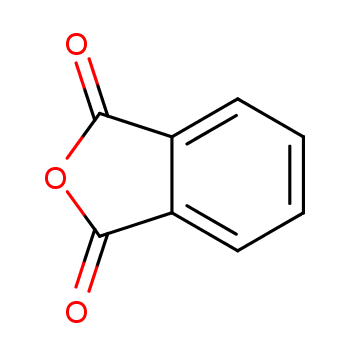
Phthalic anhydride is a toxic white crystalline compound used in the manufacture of phthalate esters and other dyes, resins, plasticizers, and insecticides. It is the anhydride of phthalic acid. This colorless solid is an important industrial chemical, particularly suited for the large-scale production of plasticizers for plastics. It is currently obtained by catalytic oxidation of o-xylene or naphthalene. Phthalic anhydride can also be prepared from phthalic acid. It is a versatile intermediate in organic chemistry, partly due to its bifunctionality and ease of access. The primary use of phthalic anhydride (PA) is as a chemical intermediate for the production of plastics from vinyl chloride. Phthalate esters, used as plasticizers, originate from phthalic anhydride. Another major use of phthalic anhydride is in the production of polyester resins, with other minor uses including in the production of alkyd resins for paints and varnishes, insecticides, and polyurethane polyols.

Phthalic anhydride is a widely used intermediate in organic chemistry, partly because it is bifunctional and inexpensive.
Heating with water hydrolyzes phthalic anhydride to form phthalic acid. The hydrolysis of anhydrides is generally not a reversible process. However, phthalic acid is readily dehydrated to form phthalic anhydride. Above 180°C, phthalic anhydride reforms.
Chiral alcohols form half esters, which are typically soluble, as they form diastereomeric salts with chiral amines (e.g., quinine) An associated ring-opening reaction involves peroxides, generating useful peroxy acids.
Phthalimide can be obtained in 95-97% yield by heating phthalic anhydride with ammonia solution. Alternatively, it can be prepared by treating the anhydride with ammonium carbonate or urea. It can also be produced by the ammonia oxidation of o-xylene, yielding phthalimide potassium, which is commercially available and is the potassium salt of phthalimide. It can be prepared by adding a hot solution of phthalic anhydride to a solution of potassium hydroxide.
Phthalic anhydride is used to dehydrate short-chain nitroalcohols, yielding compounds with high polymerization tendencies, such as nitroalkenes.
Phthalic anhydride is primarily produced by the selective oxidation of o-xylene in the gas phase. Below is a breakdown of this mechanism:
(1) The reaction occurs in the presence of a catalyst, typically vanadium pentoxide (V2O5), in a high-temperature gas-phase reactor.
(2) During the reaction, one aromatic ring in o-xylene undergoes oxidative cleavage. This means the ring breaks due to interaction with oxygen. Two carbon atoms from the cleaved ring are eliminated as carbon dioxide (CO2).
(3) The remaining carbon chain rearranges, forming the cyclic structure of phthalic anhydride with two carboxylic acid groups.
Overall, this process involves the conversion of o-xylene to phthalic anhydride while losing carbon atoms in the form of carbon dioxide.
To maintain the separation of phthalic anhydride from byproducts like o-xylene or maleic anhydride in the vapor phase, a set of "switch condensers" is necessary. Due to the highly exothermic nature of the reaction, a multi-tubular reactor cooled with molten salt is the standard technology. However, selective reduction and catalyst deactivation hot spots are unfavorable in practical operation. Completing the conversion by adding adiabatic reactors can achieve closer approximation to optimal temperature profiles by altering the design. Phthalic anhydride can also be made from phthalic acid. Currently, it is produced by oxidizing o-xylene and naphthalene in a vapor process. Constructing alternative petrochemical production routes is highly desirable to alleviate the pressure on fossil usage and the consequences of petroleum depletion.
Phthalic anhydride can undergo thermal decomposition, but its behavior depends on temperature:
(1) Above 210°C: At moderate temperatures, phthalic anhydride can further dehydrate to form phthalic acid. This reaction is a basis for the production of phthalic acid.
(2) High temperatures: At very high temperatures, phthalic anhydride can undergo more complex decomposition reactions. The specific products depend on the exact conditions but may include carbon dioxide, other organic molecules, and possibly soot.
Phthalic anhydride is typically not used as a starting material through direct heating. However, its reactivity makes it valuable in various applications:
(1) Precursor for resins and plastics: Phthalic anhydride readily reacts with other chemicals, especially alcohols and diols. These reactions form the basis of many important polymers, including polyesters and alkyd resins. These resins are used in various applications such as paints, coatings, and composites.
(2) Dienophiles in Diels-Alder reactions: Phthalic anhydride can serve as a dienophile in Diels-Alder reactions, a common tool in organic synthesis. This reaction allows chemists to produce complex molecules by linking the anhydride ring to another molecule containing a diene functional group.
Glycerol, as a by-product of biodiesel, has sparked research into its utilization as a raw material for more valuable products. Studies have proposed the possibility of producing polyester (glyptal) from glycerol using phthalic anhydride esterification, a widely used coating material. The esterification reaction between phthalic anhydride and glycerol generates saccharaldehyde, catalyzed by homogeneous or heterogeneous Lewis acid catalysts. Here are the key points breakdown:
(1) Reactants: Phthalic anhydride and glycerol.
(2) Product: Glyptal (a type of polyester resin).
(3) Reaction type: Esterification reaction (formation of ester bond between the carboxylic acid group of phthalic anhydride and the hydroxyl group of glycerol).
(4) Catalyst: Catalysts are usually required, such as Br?nsted-Lowry acids (e.g., p-toluenesulfonic acid) or Lewis acids (e.g., activated zeolite), to accelerate the reaction.
Glyptal is a versatile resin with numerous applications, including coatings, due to its excellent adhesion, hardness, and gloss, adhesives, as a binder in adhesives, and molding materials, for casting applications.
Phthalic anhydride readily reacts with alcohols and amines to produce plasticizers. These are fundamental additives that modify the physical properties of plastics, especially by increasing their flexibility and resilience. Common examples include di-2-ethylhexyl phthalate (DEHP) and diisononyl phthalate (DINP). These plasticizers make plastics easier to use and less prone to cracking or breaking under stress. They are widely used in various plastic products such as wires, hoses, pipes, flooring, and construction materials.
Phthalic anhydride plays a crucial role in the production of polyester resins. It undergoes cross-linking and polymerization reactions with diols (alcohols with two hydroxyl groups). These reactions form strong three-dimensional polyester chain networks. Polyester resins are widely used in coatings such as paints and varnishes due to their excellent durability, chemical resistance, and adhesion. They are also essential components of composite materials, where they combine with reinforcing fibers such as glass or carbon fibers to create strong, lightweight structures used in various applications in construction, transportation, and marine industries.
Phthalic anhydride is a valuable starting material for synthesizing various pharmaceutical intermediates. These intermediate molecules possess the required functional groups that can be further transformed into a wide range of drugs. While phthalic anhydride itself may not be a direct component of the final drug, it plays a crucial role in the initial stages of synthesis. It is noteworthy that certain phthalic anhydride esters may be restricted in specific pharmaceutical applications due to safety concerns.
Through this discussion, we have delved into the mechanisms and applications of the reaction of phthalic anhydride. From the basic principles of chemical reactions to specific experimental operations, we have gained a deeper understanding of the reaction process of phthalic anhydride. By exploring the reaction of phthalic anhydride, we can not only expand our chemical knowledge but also provide new insights and possibilities for research and applications in related fields. It is hoped that this article will inspire readers' interest in the reaction of phthalic anhydride, prompting them to further explore and apply this area.
[1] https://en.wikipedia.org/wiki/Phthalic_anhydride
[2] https://thechemco.com/chemical/phthalic-anhydride/
[3] https://www.sciencemadness.org/talk/viewthread.php?tid=159204
[4] https://www.sciencedirect.com/topics/chemistry/phthalic-anhydride
[5]https://www.researchgate.net/publication/337602021_Glyptal_Synthesis_from_Glycerol_and_Phthalic_Anhydride_Using_Activated_Zeolite_as_Heterogeneous_Catalyst_and_Its_Comparison_to_Homogeneous_p-Toluenesulfonic_Acid_Catalyst
[6] https://www.vedantu.com/chemistry/phthalic-acid
 |
 |
 |
 |
|
|
 EN
EN
 Agricultural News
 Food News
 Industrial News
 Cosmetic News
 Pharmaceutical News
 Science News

 4YRS
4YRS


