-
We detected your language preference as English. Would you like to switch to the English version for a better experience?
Switch to English
Stay here



In this article, we will explore the differences between phthalic acid and phthalic anhydride. Although they are similar in name, they have distinct differences in structure and properties. Understanding these differences helps us better understand their applications and characteristics in the chemical and industrial fields.
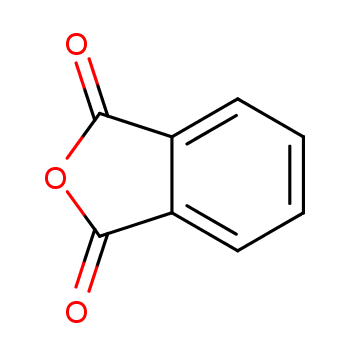
Phthalic anhydride is an organic compound with the molecular formula C8H4O3. It consists of a six-membered benzene ring and a five-membered ring containing two carbonyl (C=O) groups and one oxygen atom. The benzene ring is a cyclic structure alternating between single and double bonds, which is the basic unit of many aromatic compounds. The two carbonyl groups in phthalic anhydride are attached to adjacent carbon atoms in the five-membered ring, with the oxygen atom bridging between two other carbon atoms, forming a phthalic anhydride structure.
Phthalic anhydride is an important industrial chemical used as a precursor to produce various chemicals such as plasticizers, dyes, and resins. Its structure is crucial for understanding its reactivity and properties, as functional groups and aromaticity affect its chemical behavior.
Phthalic acid, also known as 1,2-benzenedicarboxylic acid, is a colorless crystalline organic compound commonly used in the manufacture and sale of acid anhydrides. The structure of phthalic acid is very similar to that of aromatic carboxylic acids, hence it is considered one of the simplest acids in this family. Phthalic acid, chemically termed benzene-1,2-dicarboxylic acid, clearly indicates from its nomenclature that its structure consists of a benzene ring with two carboxyl groups attached at positions 1 and 2, or in other words, an additional carboxyl group attached at the ortho position of benzoic acid. Therefore, the chemical formula of phthalic acid or ortho-phthalic acid is C6H4(COOH)2, which means there is a six-carbon ring with alternating double bonds, essentially aromatic, with carboxyl (-COOH) groups to one of the carbon atoms of the aromatic benzene ring and another carboxyl (-COOH) at the ortho position. This acid is essentially stable and considered a weak acid, but it reacts vigorously with strong bases.
Phthalic acid has various uses: primarily used in the form of acid anhydrides for the production of other chemicals such as dyes, fragrances, saccharin, phthalate salts, and many other useful products. Plasticizers such as phthalate esters (phthalic acid esters) are widely used in various consumer goods, commodities, and building materials.
Phthalic anhydride is the acid anhydride of phthalic acid. It is the primary commercial form of phthalic acid. It is the first commercially used diacid anhydride. These two compounds are closely related but have some key differences:
(1) Phthalic Acid: Molecular formula C6H4(COOH)2. Consists of a benzene ring with two carboxylic acid groups (COOH).
(2) Phthalic Anhydride: Molecular formula C6H4(CO)2O. It is formed by removing a water molecule from phthalic acid, forming a cyclic structure of anhydride (CO)2O.
(1) Phthalic Acid: A white crystalline solid, sparingly soluble in water.
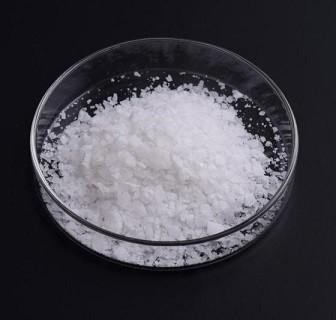
(2) Phthalic Anhydride: White solid or flake (molten form is a colorless liquid). It has a strong pungent odor and is more soluble in water than phthalic acid.
(1) Phthalic Acid: A less common form. It can be used in certain dyes, pigments, and alkyd resins. However, due to its lower reactivity, it is often converted to phthalic anhydride for industrial applications.
(2) Phthalic Anhydride: A more important industrial intermediate. Due to its cyclic structure, it readily reacts with other chemicals. Phthalic anhydride is a key starting material for:
- Plasticizers: Increasing the flexibility of plastics.
- Paints and Coatings: Enhancing gloss and durability.
- Unsaturated Polyester Resins: Used in composite materials and resins.
Phthalic acid is the parent compound, while phthalic anhydride is a more reactive derivative. The structure and reactivity of phthalic anhydride make it the preferred choice for most industrial applications.
We can convert phthalic acid to phthalic anhydride by dehydration. Since phthalic acid is a diacid with two or three carboxyl groups separated by two or three carbon atoms, it loses a water molecule upon heating to form an anhydride. This reaction removes one water molecule (H2O) from the structure of phthalic acid, forming an anhydride ring.

The most common method is by heating phthalic acid. Here are the specific steps:
(1) Heating: Phthalic anhydride can be prepared from phthalic acid by simple thermal dehydration at temperatures above 210°C. This can be achieved through various setups, such as using a round-bottom flask with a heating mantle in a laboratory setting.
(2) Dehydration: As the temperature rises, phthalic acid molecules lose a water molecule, forming phthalic anhydride. At this stage, you may observe water condensing on the walls of the reaction vessel.
(3) Monitoring: The progress of the reaction can be monitored by observing the production of water. Once the water production ceases, it indicates that most of the phthalic acid has been converted.
(4) Product Collection: Phthalic anhydride sublimes (directly from solid to gas) at high temperatures. A collection device placed above the reaction vessel can be used to capture the sublimated anhydride, which then cools and condenses back into a solid.
Phthalic acid is produced by the direct catalytic oxidation of naphthalene or o-xylene to phthalic anhydride followed by subsequent hydrolysis of the anhydride.

Phthalic anhydride readily reacts with water to yield phthalic acid. This reaction involves the cleavage of the anhydride ring by the addition of a water molecule. Essentially, it is the opening of the anhydride ring at the carbonyl (C=O) bond. The reaction proceeds with minimal conditions, heating (typically around 100°C or boiling water) can accelerate it, but it also occurs at room temperature.
Phthalic acid is not directly commercially produced: Naphthalene or o-xylene is first oxidized to phthalic anhydride, which is then hydrolyzed to phthalic acid as needed.
The hydrolysis step in large-scale production typically involves the use of acid anhydride and water in stainless steel reactors. The resulting solution of phthalic acid is then separated and purified. Phthalic anhydride readily converts back to phthalic acid at elevated temperatures (over 180°C). This dehydration reaction needs to be considered during handling and storage to prevent conversion back to the anhydride.
Phthalic acid is a dicarboxylic acid with carboxyl groups, whereas phthalic anhydride is an anhydride compound, the anhydride product of phthalic acid with ester groups. These two compounds differ significantly in structure and properties, thus having different applications and characteristics in various fields. Understanding the difference between phthalic acid and phthalic anhydride is crucial for our learning and work in the field of chemistry. Only by understanding their structures and properties can we better apply them, making the right choices and judgments in practice. Moreover, understanding the differences in various applications helps us better comprehend the mechanisms and principles of chemical reactions, providing more references and guidance for our experiments and engineering.
[1] https://www.sciencedirect.com/topics/chemistry/phthalic-acid
[2] https://en.wikipedia.org/wiki/Phthalic_acid
[3] https://en.wikipedia.org/wiki/Phthalic_anhydride
[4] https://www.sciencemadness.org/
[5] https://www.vedantu.com/chemistry/phthalic-acid
[6] https://inscricao.faculdadeitop.edu.br/mentor/draw-the-structure-of-phthalic-anhydride-which-is-also-known-gotb
|
 |
 |
 |
|
|
 EN
EN
 Agricultural News
 Food News
 Industrial News
 Cosmetic News
 Pharmaceutical News
 Science News

 4YRS
4YRS


