
What is C4H8O2?
Ethyl acetate, with a chemical formula C4H8O2, is a compound known for its sweet fruity odor. It is a clear, colorless liquid with a characteristic odor similar to ripe bananas or pear drops. Ethyl acetate is highly flammable, soluble in organic solvents such as ethanol and ether, but sparingly soluble in water. This compound is commonly used as a solvent in varnishes and lacquers, as well as in the decaffeination process of tea and coffee beans. It is also used in flavorings and perfumes due to its pleasant smell. An important aspect of molecules like C4H8O2 is their polarity, which affects their chemical behavior and interactions. So, is C4H8O2 polar or nonpolar?
What is polarity?
Polarity describes the uneven distribution of electrons in a molecule or compound. In the case of ethyl acetate (C4H8O2), polarity arises due to the differences in electronegativity between the atoms involved in the bonds.
Electronegativity is a measure of an atom's ability to attract electrons. The polarity of a bond is influenced by the electronegativity difference between the atoms forming the bond. Ethyl acetate contains carbon, hydrogen, and oxygen atoms. The oxygen atom, with an electronegativity of approximately 3.44, tends to attract electrons more strongly than carbon (2.55) and hydrogen (2.20) atoms. This creates polar bonds between carbon and oxygen, as well as between carbon and hydrogen atoms.
These polar bonds contribute to the overall polarity of the ethyl acetate molecule, impacting its physical properties and behavior in chemical reactions. What about C4H8O2? Is C4H8O2 polar or nonpolar?
Polarity of C4H8O2
Is C4H8O2 polar or nonpolar? Ethyl acetate exhibits polarity due to the presence of polar bonds between carbon, hydrogen, and oxygen atoms. The oxygen atom's strong electronegativity compared to carbon and hydrogen results in partial negative charges on the oxygen and partial positive charges on the carbon and hydrogen atoms. This uneven distribution of charges within the molecule makes ethyl acetate a polar compound. Why is C4H8O2 polar?
(1) Dipole Moment
The dipole moment in ethyl acetate arises from the vector sum of the individual bond dipoles between carbon, hydrogen, and oxygen atoms. The molecular structure of ethyl acetate allows for the overall dipole moment to exist, contributing to its polar nature.
(2) Electronegativity
| Element Electronegativity |
| C |
2.55 |
| H |
2.20 |
| O |
3.44 |
The difference in electronegativity (3.44 - 2.55 = 0.89 for C-O bond) indicates a polar covalent bond.
Despite being polar, ethyl acetate is less polar than water, making it more soluble in organic solvents than in water.

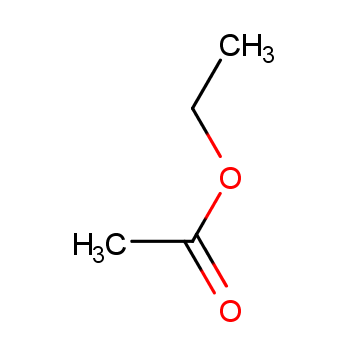
Molecule Structure of C4H8O2
Therefore,
ethyl acetate (C4H8O2) is a polar molecule.
Application of C4H8O2 Polarity
Ethyl acetate's polarity makes it an effective solvent for a variety of organic compounds. It is widely used in industries such as coatings, adhesives, and pharmaceuticals for its ability to dissolve non-polar substances effectively. Additionally, its pleasant odor makes it suitable for use in nail polish removers and perfumes.
Highlight of Ethyl acetate
| Ethyl acetate Cas 141-78-6 |
| Molecular formula |
C4H8O2 |
| Molecular shape |
Tetrahedral |
| Relative molecular mass |
88.11 g/mol |
| Solubility |
Soluble in organic solvents, sparingly soluble in water |
| Melting point |
-83.6 °C |
| Boiling point |
77.1 °C |




 EN
EN
 Agricultural News
 Food News
 Industrial News
 Cosmetic News
 Pharmaceutical News
 Science News

 1YR
1YR

