-
We detected your language preference as English. Would you like to switch to the English version for a better experience?
Switch to English
Stay here




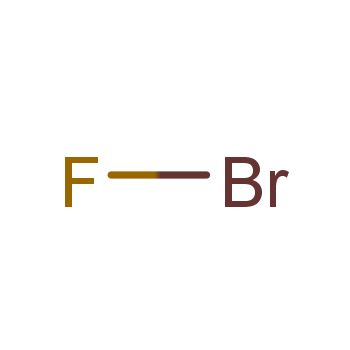
Bromine Monofluoride (br-f), also known as Bromine Fluoride, is a highly reactive, volatile, and colorless gas that is used in various industrial processes. It is a compound formed by the combination of Bromine (Br), a halogen, and Fluorine (F), another halogen. With the molecular formula BrF, this compound plays a significant role in fields such as organic synthesis, pharmaceuticals, and analytical chemistry.

Halogen compounds refer to chemical compounds that contain at least one halogen element (Fluorine, Chlorine, Bromine, Iodine, or Astatine). These elements are known for their high reactivity, especially with metals, organic compounds, and water. Bromine Monofluoride is a prime example of a halogen compound, showcasing the potential for reactivity that halogen elements can offer.
Bromine Monofluoride is a polar molecule due to the differences in electronegativity between bromine and fluorine. Fluorine has a higher electronegativity compared to bromine, leading to an uneven distribution of electron density in the BrF molecule. This results in a partial negative charge on the fluorine atom and a partial positive charge on the bromine atom, making the molecule polar.


The molecular structure of Bromine Monofluoride is characterized by a linear arrangement of the bromine and fluorine atoms. Due to the high electronegativity of fluorine, the Br-F bond is polar, causing the molecule to have a dipole moment. This polarity influences the molecule's properties, such as its boiling point, solubility, and reactivity.
Bromine Monofluoride finds application in several areas:
Analytical Chemistry: It is used in gas chromatography as a detection agent due to its high reactivity with various organic compounds.
Organic Synthesis: It acts as a powerful fluorinating agent, introducing a fluorine atom into organic molecules, which is crucial in the preparation of certain pharmaceuticals and agrochemicals.
Plastics Industry: In the production of certain polymeric materials, Bromine Monofluoride can be utilized for modifying the properties of plastics.
Handling Bromine Monofluoride requires extreme caution due to its high reactivity and potential health hazards. Exposure to Bromine Monofluoride can cause respiratory irritation, skin burns, and eye damage. Proper ventilation, protective clothing, and appropriate safety measures are essential when working with this compound.
In summary, Bromine Monofluoride (BrF) is a polar halogen compound with unique properties that make it valuable in various scientific and industrial applications. Its reactivity and polarity distinguish it from other halogen compounds, making it a versatile tool in research and manufacturing.
 |
 |
|
 EN
EN
 Agricultural News
 Food News
 Industrial News
 Cosmetic News
 Pharmaceutical News
 Science News