-
We detected your language preference as English. Would you like to switch to the English version for a better experience?
Switch to English
Stay here




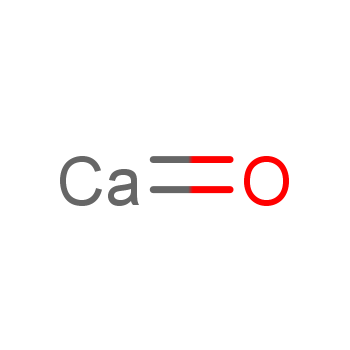
Calcium oxide, commonly known as lime, is a white caustic crystalline alkali substance. The term "lime" is used both generically for various calcium compounds and with adjectives to specify different forms of lime. In this context, lime, also referred to as quicklime or burnt lime, is synonymous with the compound calcium oxide. When lime is combined with water, it forms hydrated lime, known as calcium hydroxide (Ca(OH)2), and is commonly called slaked lime. Dolomite limes contain both magnesium and calcium. Limestone is the compound calcium carbonate. The term "lime" originates from the Old English word "l?m," denoting a sticky substance, reflecting its historical use in mortar production. The Latin word "calx," meaning lime, was used to name the element calcium.
The production of calcium oxide dates back to prehistoric times. It involves heating limestone to drive off carbon dioxide in a process called calcination: CaCO3(s) → CaO(s) + CO2(g). Efficient calcium oxide production occurs at temperatures exceeding 1,000°C. Historically, open fires were used to heat limestone, but over time, lined pits and kilns became prevalent. Brick lime kilns, introduced in the 17th century, have maintained relatively constant technology. Modern lime kilns now operate at temperatures ranging from 1,200°C to 1,300°C. Crushed and screened limestone is fed into the kiln's top, and air at the bottom fluidizes the limestone, enhancing reaction efficiency.
Rotating horizontal kilns, several meters in diameter and up to 100 meters in length, are also employed for lime production. In these kilns, limestone is fed into the elevated end and moves down the rotating kiln by gravity as it undergoes heating and conversion into lime. A significant portion of the produced lime undergoes hydration with water through a process called slaking, resulting in slaked lime or calcium hydroxide (Ca(OH)2): CaO(s) + H2O(l) → Ca(OH)2(s). The hydration of calcium oxide is highly exothermic, making the conversion to slaked lime a safety measure.
The historical application of lime is primarily as a mortar, with evidence indicating its usage by the Egyptians as early as 4000 b.c.e. Lime mortars, comprising lime, water, and sand, rely on the reaction of slaked lime with atmospheric carbon dioxide to form calcium carbonate and water: Ca(OH)2 (aq) + CO2 (g) → CaCO3 (s) + H2O (l). The gradual conversion of slaked lime to limestone results in extended curing periods, but contemporary mortars incorporate diverse substances to regulate curing times. Cement, a prevalent mortar, prominently features lime as a key component. Portland cement, named after Joseph Aspdin (1799–1855), is composed of heated limestone, clay, and sand in kilns at 2,700°C.
Throughout antiquity, lime played a crucial role in glass production. Early glass compositions involved melting silica (SiO2), sodium carbonate (soda ash, Na2CO3), and lime, while modern soda-lime glass comprises approximately 70% silica, 15% soda (Na2O), and 5% lime. Lime consistently ranks among the top ten chemicals produced annually, with around 15 million tons of calcium oxide and 22 million tons of lime compounds (burnt, slaked, dolomite) generated annually in the United States.
Lime's significant applications span metallurgy, flue gas desulfurization, construction, mining, papermaking, and water treatment. About one third of U.S. calcium oxide production is dedicated to metallurgical processes, particularly in the iron and steel industry, where it aids in impurity removal during iron ore refining.
In environmental contexts, lime mitigates sulfur emissions from coal-fired power plants, with over 95% sulfur elimination achieved through the reaction of calcium oxide with sulfur dioxide: CaO(s) + SO2(g) → CaSO3(s). Lime is also employed in drinking water treatment, wastewater treatment, and the remediation of mine wastes.
Within the paper industry, lime contributes to the production of calcium hypochlorite and aids in the recovery of sodium hydroxide. Additionally, lime is a feedstock in the chemical industry, generating calcium carbide through a reaction with carbon in the form of coke: 2CaO(s) + 5C(s) → 2CaC2(s) + CO2(g).
Calcium oxide's application in the construction sector involves treating soils at construction sites to enhance drying and stabilize soil chemistry, thereby providing a stronger foundation. Lime's role as a liming agent, neutralizing soil acidity, is limited due to storage challenges and causticity, with agricultural lime, typically crushed calcitic or dolomitic limestone, being the preferred form for agricultural purposes.
Richard L. Myers (2009). The 100 Most Important Chemical Compounds: A Reference Guide. Greenwood Publishing Group. October 1, 2009. https://doi.org/10.1021/ed086p1182
 |
 |
|
 |
|
 |
 EN
EN
 Agricultural News
 Food News
 Industrial News
 Cosmetic News
 Pharmaceutical News
 Science News

 6YRS
6YRS

