-
We detected your language preference as English. Would you like to switch to the English version for a better experience?
Switch to English
Stay here



On February 21, 2025, the FDA approved CtexliTM (chenodiol) for the treatment of adult Cerebrotendinous Xanthomatosis (CTX). Prior to this, the FDA had granted it Priority Review, Fast Track, and Orphan Drug Designation. CtexliTM is the world's first FDA-approved drug for the treatment of CTX.

Cerebrotendinous Xanthomatosis is a rare hereditary disorder of bile acid synthesis caused by mutations in the CYP27A1 gene. This results in a deficiency of a mitochondrial enzyme (sterol 27-hydroxylase) involved in the conversion of cholesterol to chenodeoxycholic acid. CTX is an autosomal recessive metabolic disease. Due to reduced bile acid production in the liver, CTX patients cannot properly metabolize cholesterol, leading to abnormal metabolic byproducts, such as cholesterol and cholestenol, accumulating in neural cells and cell membranes. This affects the brain, liver, skin, tendons, spinal cord, and ocular lens.
Incidence and Prevalence
Globally, the incidence of CTX is estimated to range from 1/36,042 to 1/468,624. In the United States, the prevalence is estimated at 3 to 5 cases per 100,000 people. To date, approximately 425 cases have been reported worldwide, though the actual number of patients may be much higher. CTX presents with diverse and complex clinical manifestations, including chronic diarrhea, cataracts, tendon xanthomas, and neurological dysfunction. Due to variations in symptom onset and severity, CTX is often misdiagnosed or undiagnosed, suggesting a significant underestimation of its true prevalence.
Clinical Manifestations
Symptoms of CTX typically begin in childhood with chronic diarrhea and neonatal jaundice. Cataracts may develop in adolescence, tendon xanthomas in young adulthood, and neurological dysfunction in later adulthood. Due to the nonspecific nature of symptoms, the average age at diagnosis is 35.5 years, often resulting in late-stage diagnosis when irreversible neurological damage has already occurred.
Basic Information
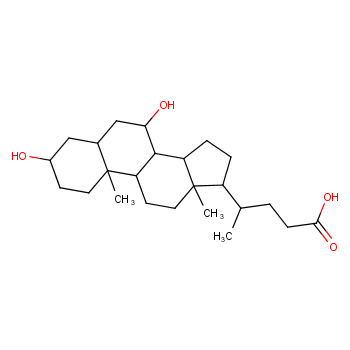
Chenodiol's active ingredient is chenodeoxycholic acid (CDCA), a primary endogenous bile acid. CtexliTM works by supplementing the deficient CDCA in the body, restoring normal bile acid metabolism and reducing the accumulation of abnormal metabolic byproducts. Increased CDCA levels activate the farnesoid X receptor (FXR), downregulating the expression of cholesterol 7α-hydroxylase (CYP7A1).
CtexliTM was previously approved by the EMA on April 10, 2017, under the trade name Chenodeoxycholic Acid Leadiant (previously Chenodeoxycholic Acid Sigma-Tau)?, in a 250 mg hard capsule formulation. The newly approved FDA formulation is a 250 mg oral tablet.
Clinical Results
The approval of CtexliTM was based on data from a randomized, double-blind, placebo-controlled, two-period, two-treatment crossover clinical trial (NCT04270682). A total of 14 patients were enrolled, with 13 patients randomly assigned to receive either 250 mg of CtexliTM or a placebo in a crossover withdrawal design for 4 weeks per treatment period. The study also included an 8-week lead-in phase and an 8-week open-label phase between the two blinded withdrawal periods.
Among the 13 randomized patients, 62% were male and 39% were female. The median baseline age was 42 years (range: 16–55), with a median diagnosis age of 35 years (range: 15–55). The 24-week trial demonstrated that CtexliTM (250 mg × 3/day) significantly reduced plasma cholestenol and urinary 23S-pentanol levels in CTX patients compared to the placebo group.


Safety
The NCT04270682 trial assessed adverse event rates associated with the drug. The most common adverse reactions (≥14%) were diarrhea (36%), headache (21%), abdominal pain (14%), constipation (14%), hypertension (14%), muscle weakness (14%), and upper respiratory tract infection (14%). One patient (7%) receiving CtexliTM experienced ALT levels exceeding three times the upper normal limit, leading to treatment discontinuation.
Currently, CtexliTM is the only FDA-approved drug for CTX. Additionally, Vivet Therapeutics is developing an adeno-associated virus (AAV)-based gene therapy, VTX-806. VTX-806 delivers a functional CYP27A1 gene to the liver to restore normal bile acid synthesis. It is currently in preclinical studies, where AAV8-EAAT-CYP27A1 gene therapy has demonstrated dose-dependent reversal of liver enlargement in CTX mouse models. In September 2024, the EMA granted Orphan Drug Designation to this therapy.

The development of orphan drugs is progressing rapidly, driven by policy support, technological advancements, and market demand. The rise of precision medicine and gene therapy will further enhance orphan drug research and development. However, balancing economic incentives with patient accessibility remains a key challenge in ensuring the sustainable development of orphan drugs. CTX is a progressive multi-system disease with a significant impact on patients, and until now, no approved treatment has been available. The approval of CtexliTM provides CTX patients with a safe and effective therapeutic option.
|
|
 |
 |
 EN
EN
 Agricultural News
 Food News
 Industrial News
 Cosmetic News
 Pharmaceutical News
 Science News

 2YRS
2YRS

