-
We detected your language preference as English. Would you like to switch to the English version for a better experience?
Switch to English
Stay here



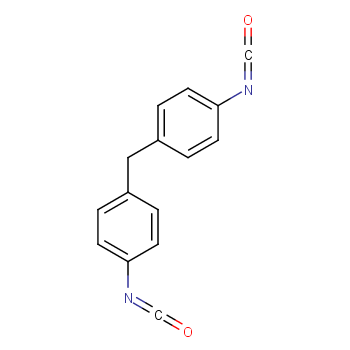
Dow and BASF have formed an MDI Fair Trade Alliance, requesting the U.S. Department of Commerce and the U.S. International Trade Commission (USITC) to impose anti-dumping duties on diphenylmethane diisocyanate (MDI) imported from China. According to their petition submitted on February 12, MDI from China is being sold to the U.S. at unfairly low prices and through unfair trade practices, making it impossible for “(domestic producers) to obtain a fair, market-based return.”

Covestro and Huntsman also produce MDI in the U.S., but they are not members of the specially formed MDI Fair Trade Alliance.
The main target of the petition is the manufacturer Wanhua Chemical Group. The petition states that the company and its subsidiaries account for 97% of the MDI imports from China in the second half of 2024. The petition also mentions that “the vast majority” of these imports are by Wanhua Chemical USA, Inc.
The petition alleges a dumping margin of 305.81% to 507.13%. The preliminary hearing by the U.S. International Trade Commission is scheduled for March 5, 2025. The earliest potential date for the retroactive suspension of anti-dumping duties is April 23, 2025.
It is reported that MDI from China is already subject to a 25% tariff under Section 301, which was implemented during President Trump's first term. Additionally, it will be subject to a 10% tariff planned by the Trump administration on all Chinese imports.
The volume of MDI imports from China has increased from 163,887 tons in 2022 to 198,761 tons in 2024, a 21% increase.
The global MDI production capacity is relatively concentrated, with Wanhua Chemical (3.5 million tons/year), BASF (2.07 million tons/year), Covestro (1.77 million tons/year), Huntsman (1.37 million tons/year), Dow (1.11 million tons/year), Mitsui Chemicals (610,000 tons/year), Japan’s Tokai Chemical (470,000 tons/year), and Iran’s Karoon (40,000 tons/year), among others.
BASF's MDI upgrading project in Chongqing, China, will not be operational until the end of 2024, increasing its capacity to 530,000 tons/year. BASF is also planning an upgrade project in Shanghai, China, aiming to increase its crude MDI capacity to 401,760 tons/year.
Furthermore, both BASF and Dow have made significant investments in U.S. MDI production capacity: BASF is in the final stages of its nearly $1 billion MDI capacity expansion at its Geismar, Louisiana plant. Dow started a new MDI plant in Freeport, Texas in 2023 to replace and expand the old plant in La Porte, Texas.
According to relevant data, the total MDI production capacity in the U.S. will reach 1.8 million tons/year in 2024, while North America's MDI demand will be approximately 1.83 million tons.
The products involved in the petition are diphenylmethane diisocyanate (MDI), including polymeric, monomeric, and modified MDI.
The physical forms of MDI range from low-viscosity liquids to solids. Whether or not MDI has undergone a distillation process, or its acid content, reactivity, functionality, freeze stability, physical form, viscosity, grade, purity, molecular weight, or packaging, it is included within the scope of this petition.
MDI may contain additives such as catalysts, solvents, plasticizers, antioxidants, flame retardants, colorants, pigments, diluents, thickeners, fillers, softeners, or tougheners. Mixtures of MDI with other materials, if MDI makes up less than 40% of the total weight of the mixture, are excluded from the scope of this petition. MDI can react with itself, polyols, or polyamines and retain unreacted MDI components, thus transforming into different products that no longer contain isocyanate groups.
In these products, if the NCO content is less than 10% of the total weight, they are also excluded from this petition. The scope of this petition includes goods processed in third countries that match the above descriptions, including mixing, diluting, adding or removing additives, or undergoing any other processing, as long as such processing does not remove the goods from the scope of the investigation if performed in the target country.
The products are currently classified under U.S. Harmonized Tariff Schedule (HTSUS) codes 2929.10.8010 and 3909.31.0000. Related goods may also be classified under codes 3506.91.5000, 3815.90.5000, 3824.99.2900, 3824.99.9397, 3909.50.5000, 3911.90.4500, 3920.99.5000, and 3921.13.5000.
MDI is a versatile chemical intermediate used in various applications, including the production of rigid foam plastics for insulation materials, soft foam plastics for automotive seats, bedding, and furniture, as well as for coatings, adhesives, sealants, and elastomers.
From the perspective of China's MDI export volume to the U.S. in 2024, the tariff on Chinese polymeric MDI is 31.5%. China is expected to export 268,000 tons of polymeric MDI to the U.S. in 2024, which accounts for 22% of China’s total polymeric MDI exports and 7.7% of Wanhua Chemical’s total MDI production capacity in 2024.
Moreover, since Wanhua Chemical has 400,000 tons of MDI production capacity in Hungary, if the U.S. imposes anti-dumping duties or significantly increases tariffs, Wanhua can export MDI from its Hungarian base to the U.S. and increase exports from China to Europe. The ultimate impact would be a slight increase in transportation costs for Wanhua's MDI, but it would not significantly affect the overall sales and profits of MDI because the tariff has already been set at 31.5%.
It is worth mentioning that in 2025, due to rising logistics, raw materials, and energy costs, Wanhua Chemical, BASF, Huntsman, and Covestro have all raised their MDI prices.
 |
 |
|
 |
|
|
 EN
EN
 Agricultural News
 Food News
 Industrial News
 Cosmetic News
 Pharmaceutical News
 Science News

 5YRS
5YRS

