-
We detected your language preference as English. Would you like to switch to the English version for a better experience?
Switch to English
Stay here




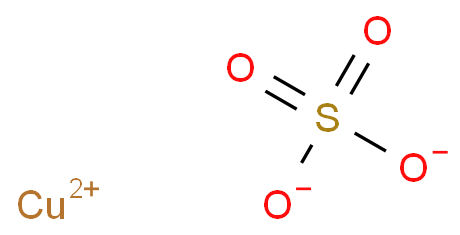
The Lewis structure for Copper Sulfate (CuSO4) is a representation of the electron arrangement within the compound. Copper (Cu) and Sulfate (SO4) ions are interconnected through covalent bonding, forming a complex ion. Copper, being a transition metal, can participate in various oxidation states. In CuSO4, copper typically exhibits a +2 oxidation state. The sulfate ion (SO4^2-) has a -2 charge, consisting of a sulfur atom bonded to four oxygen atoms. The Lewis structure highlights the distribution of valence electrons among atoms, adhering to the octet rule for most elements.
Copper Sulfate (CuSO4) is an inorganic compound composed of copper and sulfur, with oxygen as the third element. It is commonly known for its blue crystalline form, often referred to as blue vitriol. Copper Sulfate finds extensive applications in various fields including electroplating, water treatment, and agriculture. It is also used in the production of other copper compounds and as a fungicide.

To draw the Lewis structure for Copper Sulfate (CuSO4), follow these steps:

Copper Sulfate (CuSO4) is essentially an ionic compound formed between Copper (II) ions (Cu2+) and Sulfate ions (SO4^2-). The sulfate ion has a tetrahedral geometry around the sulfur atom, with each oxygen atom forming a double bond to sulfur. Copper, being a transition metal, contributes to the complex structure of the compound, which can exhibit various coordination numbers and geometries depending on the specific conditions and reagents used in synthesis.
Copper in CuSO4 is in the +2 oxidation state. Its electron configuration in this state is [Ar] 3d10 4s1. The d10 configuration allows copper to readily form a stable compound without further electron transfer. Copper in this compound acts as a metal cation, participating in coordination complexes. The sulfur and oxygen atoms around copper are involved in ligand bonding, contributing to the overall structure of the compound.
Copper Sulfate (CuSO4) is characterized by its strong electrostatic forces due to the presence of charged ions. Copper ions carry a +2 charge, while sulfate ions carry a -2 charge, resulting in a net ionic charge of zero when considering the entire molecule. These charges lead to significant ionic interactions, which contribute to the compound's solubility, conductivity, and various physical properties such as color and melting point.
The stability of Copper Sulfate (CuSO4) arises from the strong ionic bonds between copper and sulfur, as well as the covalent interactions within the sulfate ion. It is highly stable under normal conditions and does not readily react with water or other common reagents. However, it can undergo redox reactions, particularly when exposed to reducing agents or in acidic solutions, leading to the formation of other copper compounds or changes in its oxidation state.
Copper Sulfate (CuSO4) has a wide range of applications across multiple industries:
Handling Copper Sulfate (CuSO4) requires proper safety measures due to its potential hazards:
Copper Sulfate (CuSO4) can impact the environment if not managed properly:
Proper storage and disposal practices are crucial for managing Copper Sulfate (CuSO4):
 |
|
 |
 |
 |
 EN
EN
 Agricultural News
 Food News
 Industrial News
 Cosmetic News
 Pharmaceutical News
 Science News

 1YR
1YR


