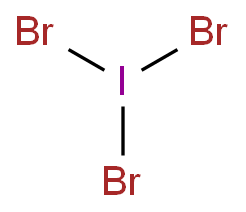
What is IBr3?
Iodine tribromide, with a chemical formula of IBr3, is a compound that exists as a reddish-brown solid. It is known for its characteristic odor and is highly reactive. Iodine tribromide is soluble in many organic solvents such as carbon tetrachloride and chloroform but insoluble in water. At room temperature, it decomposes slowly into iodine and bromine, releasing toxic fumes. An important aspect of molecules like IBr3 is their polarity, which affects their chemical behavior and interactions. So, is IBr3 polar or nonpolar?
What is polarity?
Polarity describes the uneven distribution of electrons in a molecule or compound. In chemistry, the polarity of a molecule refers to the uneven distribution of positive and negative charges, resulting in the molecule having positive and negative poles. This uneven distribution is typically due to differences in electronegativity between atoms.
Electronegativity is a measure of an atom's ability to attract electrons. The polarity or non-polarity of a bond between two atoms is determined by the electronegativity of the constituent elements. When there is a significant difference in electronegativity between two atoms, with an electronegativity difference ranging from 0.5 to 2, one atom will attract the shared electron pair more strongly, causing the electron pair in the covalent bond to be skewed toward one atom, giving it a partial negative charge, while the other atom carries a partial positive charge. In this case, the molecule exhibits polarity.
Polar molecules display unique behaviors in chemical reactions and physical properties such as solubility, melting point, boiling point, etc. These properties make polar molecules important in many chemical and biological processes. What about IBr3? Is Ibr3 polar or nonpolar?
Polarity of IBr3
Is IBr3 polar or nonpolar? Iodine tribromide, despite consisting of three bromine atoms and one iodine atom, is a polar molecule. Why is IBr3 polar?
(1) Dipole Moment
Bromine is a halogen with high electronegativity, causing the iodine atom to carry a slight positive charge. The electronegativity difference between iodine and bromine results in polar bonds. The molecular structure of iodine tribromide is trigonal pyramidal, with the dipole moment pointing toward the more electronegative bromine atoms, resulting in an overall dipole moment.
(2) Electronegativity
| Element Electronegativity |
| I |
2.66 |
| Br |
2.96 |
The difference in electronegativity (2.96 - 2.66 = 0.3) is significant enough to create a polar bond.
Although iodine has a lower electronegativity compared to bromine, the molecular structure of iodine tribromide results in an uneven distribution of charge due to the arrangement of atoms in space.
Therefore, iodine tribromide, IBr3, is a polar molecule.
Application of IBr3 Polarity
Iodine tribromide has applications in organic synthesis as a reagent for various reactions, including halogenation and oxidation. Its polar nature makes it suitable for use in selective chemical transformations where control over reaction conditions and product formation is crucial.
Highlight of Iodine Tribromide
| Iodine Tribromide Cas 7789-58-4 |
| Chemical Formula |
IBr3 |
| Molecular Shape |
Trigonal Pyramidal |
| Relative Molecular Mass |
Approximately 430.53 g/mol |
| Solubility |
Soluble in organic solvents, insoluble in water |
| Melting Point |
Approximately 95 °C |
| Boiling Point |
Decomposes around 150 °C |




 EN
EN
 Agricultural News
 Food News
 Industrial News
 Cosmetic News
 Pharmaceutical News
 Science News