-
We detected your language preference as English. Would you like to switch to the English version for a better experience?
Switch to English
Stay here




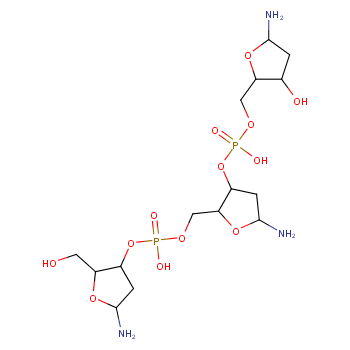
Deoxyribonucleic Acid (DNA), with the CAS number 9007-49-2, is a complex macromolecule that is essential for the storage and transmission of genetic information in living organisms. As a large molecule composed of nucleotides, DNA exhibits a unique combination of physical and chemical properties. One of the most significant characteristics of DNA is its double helix structure, which allows for the precise replication and expression of genetic information. This structure also influences how DNA interacts with other biomolecules, making it central to cellular processes such as transcription and replication. Moreover, the intricate nature of DNA is fundamental to its role in heredity, genetic variation, and evolutionary adaptation. But what exactly are the structural and functional aspects that define DNA?
When atoms in a bond have significantly different electronegativities, with a difference typically ranging from 0.5 to 2, the shared electrons tend to be pulled closer to the more electronegative atom. This shift in electron density results in one part of the molecule carrying a partial negative charge and the other a partial positive charge, thereby giving the molecule its polar character.
Polar molecules, such as water, exhibit distinctive chemical and physical behaviors, including higher solubility in water, elevated boiling and melting points, and unique interactions in biological systems. These characteristics make polarity a crucial factor in many chemical and biological processes. But what about dna? Is dna polar or nonpolar?
Is dna polar or nonpolar? To understand the polarity of DNA, we need to examine its components and their interactions. DNA is a complex molecule, but its polarity can be analyzed through the following key aspects: molecular geometry, dipole moment, and electronegativity.
Molecular Geometry: The deoxyribose sugar and the phosphate group from the backbone of the DNA molecule, while the nitrogenous bases extend outward. The backbone has a linear structure with alternating sugar and phosphate groups. This arrangement creates a partially charged environment, contributing to the overall polarity of the molecule.
Dipole Moment: A molecule’s dipole moment measures the separation of positive and negative charges. In DNA, the phosphate groups carry a negative charge, while the sugar-phosphate backbone contributes to the overall dipole moment. The nitrogenous bases, particularly those with multiple rings, also contribute to the dipole moment. Therefore, DNA exhibits a net dipole moment, indicating that it is a polar molecule.
Electronegativity: Electronegativity plays a crucial role in determining polarity. In DNA, the oxygen atoms in the phosphate groups have a high electronegativity (3.44 on the Pauling scale) compared to the carbon (2.55) and hydrogen atoms (2.20). This difference in electronegativity results in an uneven distribution of electron density within the molecule, confirming the polarity of DNA.
| Deoxyribonucleic Acid Cas 9007-49-2 | |
| Molecular formula | C??H??N?O?P |
| Molecular shape | Double helix |
| Relative molecular mass | Varies based on length and sequence |
| Solubility | Miscible in water, insoluble in organic solvents |
| Melting point | Depends on the GC content and length of the DNA strand |
| Boiling point | Not applicable due to thermal denaturation |
| Compound | Polarity | Applications |
| Ribonucleic Acid (RNA) | Polar due to the presence of ribose sugar and phosphate backbone; similar to DNA but with distinct structural features. | Involved in gene expression, including mRNA, tRNA, and rRNA functions. |
| Adenosine Triphosphate (ATP) | Polar due to the phosphate groups; highly polar and essential for energy transfer in cells. | Energy currency in cells, involved in various metabolic processes. |
|
 |
 |
 |
 EN
EN
 Agricultural News
 Food News
 Industrial News
 Cosmetic News
 Pharmaceutical News
 Science News

 13YRS
13YRS

