
What is Antimony Trifluoride (sbf3)?
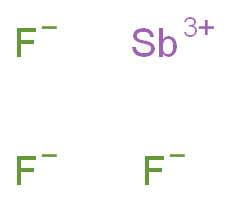
Antimony Trifluoride (sbf3) is a chemical compound composed of one antimony atom and three fluorine atoms. This inorganic compound is known for its unique properties, making it valuable in various industries, particularly in the fields of electronics and materials science. As a highly reactive substance, SbF3 plays a significant role in chemical reactions and has applications in semiconductor manufacturing, pharmaceuticals, and the production of certain types of glasses.
What is polarity?
Polarity refers to the uneven distribution of electrical charge within a molecule or compound. This occurs when the atoms within the molecule have different electronegativities, causing electrons to be drawn more strongly towards the more electronegative atom. This leads to the formation of partial positive and negative charges within the molecule, resulting in a dipole. Polar molecules, such as water, exhibit unique physical and chemical properties, like high solubility and specific interactions, which are critical for numerous biological and chemical processes.
Polarity of Antimony Trifluoride (sbf3)
From the perspectives of molecular structure, dipole moment, and electron distribution, antimony trifluoride (SbF?) is a polar molecule. Here's the analysis based on these three aspects:
1. Molecular Structure
SbF? has a trigonal pyramidal molecular geometry. The antimony (Sb) atom is at the center, bonded to three fluorine (F) atoms, and there is one lone pair of electrons on the antimony. This lone pair causes the molecular structure to be asymmetrical, which contributes to its polarity.

2. Dipole Moment
The Sb–F bonds are polar due to the significant difference in electronegativity between antimony and fluorine. Fluorine is much more electronegative, pulling electron density towards itself, leading to partial negative charges on the fluorine atoms and a partial positive charge on the antimony atom. The asymmetry in the structure prevents the dipoles from canceling out, resulting in a net dipole moment.

3. Electron Distribution
In SbF?, the electron density is unevenly distributed. The fluorine atoms, being highly electronegative, attract more electron density, creating an electron-rich region around the fluorine atoms and an electron-deficient region around the antimony atom. The lone pair of electrons on the antimony further distorts the electron cloud, enhancing the asymmetry and reinforcing the molecule’s polarity.

Thus, SbF? is polar due to its asymmetric structure, non-zero dipole moment, and uneven electron distribution.
Application of Antimony Trifluoride (sbf3)
1. Glass and Ceramics Production
SbF? is commonly used as a flux in the manufacture of specialty glasses and ceramics. It helps lower the melting point of materials, improving their workability and enhancing the smoothness and clarity of the final glass or ceramic products.
2. Fluorinating Agent in Organic Chemistry
SbF? is an effective fluorinating agent. It is used to convert hydroxyl (-OH) groups into fluorine (-F) in organic compounds. This property makes it useful in the synthesis of various organofluorine compounds, which are essential in the pharmaceutical, agrochemical, and material science industries.
3. Catalyst in Chemical Reactions
SbF? acts as a catalyst in certain chemical reactions, especially in polymerization and other organic transformations. It can facilitate the reaction conditions and improve yields in some industrial processes.
4. Preparation of Antimony Pentafluoride (SbF?)
SbF? is often used as a precursor in the production of antimony pentafluoride (SbF?), which is a stronger fluorinating agent and has its own applications, including in the production of superacids like fluoroantimonic acid (HSbF?).
5. Etching and Surface Treatment
SbF? is used in some etching and surface treatment processes. For example, it can be used to treat certain metals and alloys, especially when high-quality surface finishes are required in the production of electronics or precision equipment.
6. Optical Coatings
Due to its properties, antimony trifluoride can be used in the production of optical coatings, where its ability to alter refractive properties is valuable in enhancing the performance of lenses and other optical components.
7. Pharmaceuticals and Agrochemicals
As part of fluorinating agents, SbF? contributes to the synthesis of fluorinated pharmaceuticals and agrochemicals. These compounds often have improved biological activity, metabolic stability, and other desirable properties due to the presence of fluorine atoms.




 EN
EN
 Agricultural News
 Food News
 Industrial News
 Cosmetic News
 Pharmaceutical News
 Science News

 15YRS
15YRS

