-
We detected your language preference as English. Would you like to switch to the English version for a better experience?
Switch to English
Stay here



Adipic acid is a common organic compound. While it plays a significant role in production and processing, it is crucial to recognize the potential hazards and risks associated with adipic acid. This article aims to explore adipic acid hazards and understand its possible impacts on health and the environment.
Adipic acid is a white crystalline solid and an essential industrial chemical primarily used in the production of nylon. However, its usefulness comes with some dangers. Although it does not pose a severe threat under normal circumstances, adipic acid dust can irritate the skin, eyes, and respiratory system. Inhaling high concentrations can further irritate the lungs and may affect the nervous system. Additionally, adipic acid dust has explosion risks, requiring careful handling and dust reduction strategies in industrial environments.
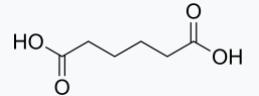
Adipic acid, like most carboxylic acids, is a mild skin irritant. It has low toxicity, with a median lethal dose (LD50) for rats at 3600 mg/kg. While it is generally safe for the public due to its infrequent presence, individuals in industrial settings or those directly handling the chemical must take precautions.
Personal Protective Equipment (PPE): When handling adipic acid, wear gloves, safety glasses or goggles, and protective clothing to prevent skin irritation. In dusty environments, wearing a mask is recommended.
Ventilation: Ensure adequate ventilation to avoid inhaling dust particles.
Hygiene: Thoroughly wash after handling adipic acid to avoid contact with eyes and mouth.
Adipic acid is an irritant, meaning it can cause irritation to the skin, eyes, and respiratory tract upon contact or inhalation. The workplace exposure limit is set by organizations such as the American Conference of Governmental Industrial Hygienists (ACGIH). The threshold limit value (TLV) for adipic acid is 5 mg/m3, averaged over an eight-hour shift.
Adipic acid is listed on various hazardous substance inventories due to its potential health impacts. Specific handling regulations may vary by location and industry, but common guidelines include:
Following the Globally Harmonized System of Classification and Labeling of Chemicals (GHS) for labeling containers.
Employers must comply with the Right-to-Know laws, which require informing workers of chemical hazards and providing safety training.
Refer to Safety Data Sheets (SDS) for detailed handling and storage instructions.
Eye Contact: Can cause eye irritation.
Skin: May cause skin irritation. Adipic acid can dry the skin, potentially leading to dermatitis in humans.
Ingestion: Large amounts may cause gastrointestinal irritation.
Inhalation: Can cause respiratory tract irritation. Clinical studies on workers in adipic acid manufacturing found that inhaling adipic acid dust caused autonomic nervous dysfunction in the nervous system and gastrointestinal tract.
Why is adipic acid toxic? Adipic acid has low acute toxicity and does not cause skin sensitization or genetic mutations. Neutralization of its pH improves its toxicity profile. However, it can still cause irritation or harm in specific ways. High concentrations of adipic acid can cause persistent structural and functional lung changes, likely due to its acidity and lipophilicity. Adipic acid has very low acute toxicity in rats with an LD50 > 5000 mg/kg. It causes slight or no skin irritation in guinea pigs and is not a skin sensitizer. In washed rabbit eyes, it causes mild conjunctival irritation; in unwashed rabbit eyes, it causes slight conjunctival irritation, mild iritis, but no corneal effects. Adipic acid dust can irritate lung and nasal mucosa. In a two-year feeding study, rats fed with up to 5% adipic acid showed only weight loss. Adipic acid is not genotoxic in multiple test systems. It does not show developmental toxicity in mice, rats, rabbits, or hamsters when orally administered. Adipic acid is partially metabolized in humans, with the remainder excreted unchanged in the urine. In acute tests, adipic acid shows mild to moderate toxicity to fish, daphnia, and algae.
Adipic acid is considered flammable but not highly flammable. This means it will burn if exposed to high temperatures but does not ignite as easily as substances like gasoline or lighter fluid. Adipic acid’s flammability was assessed following EEC Directive 92/69, Annex V, Part A10, and it did not ignite. Thus, it is not classified as “highly flammable.”
Adipic acid is not strongly corrosive, but certain factors must be considered:
Aqueous Solutions: Solid adipic acid may not cause significant corrosion, but its aqueous solutions can be corrosive.
Decomposition: Adipic acid decomposes at high temperatures, producing corrosive fumes like valeric acid.
Metals: Over time, solid adipic acid can absorb moisture, leading to slow corrosion of metals like iron, steel, and aluminum.
Therefore, direct contact should be avoided, especially with liquid or heated forms of adipic acid, using appropriate PPE.
Adipic acid itself is not explosive. The primary concern is its dust. In sufficient concentrations, adipic acid dust can form explosive mixtures with air, meaning a spark or other ignition source can cause a dust explosion. This is due to the large surface area of dust particles relative to their mass, enabling rapid reaction with oxygen in the air.
An adipic acid dust cloud can cause a violent explosion if ignited. Here are some important points regarding adipic acid dust explosions:
Lower Explosion Limit (LEL): 15 mg/L. This means at least 15 mg of dust per liter of air is needed for an explosion.
Upper Explosion Limit (UEL): 10-15 mg/L. If dust concentration exceeds this, an explosion is unlikely.
Minimum Ignition Energy (MIE): Adipic acid dust has a relatively low MIE, meaning a small spark or flame can ignite an adipic acid dust cloud.
It is crucial to implement measures to prevent dust explosions when using adipic acid.
Fish: Bluegill/sunfish: LC50 = 97-330 mg/L; 24-96 hours. Adipic acid’s estimated Koc is about 26, using a measured log Kow of 0.08 and a regression-derived equation. This Koc estimate indicates that adipic acid is expected to have very high mobility in soil.
Based on adipic acid’s extrapolated vapor pressure, it is not expected to volatilize from dry soil surfaces. Biodegradation screening tests indicate that adipic acid is readily biodegradable. In a soil biodegradation bottle test with an initial adipic acid concentration of 1 mg/g soil, 84% of the adipic acid carbon was converted to carbon dioxide over 30 days of aerobic incubation.
Based on the gas/particle partitioning model of semivolatile organic compounds in the atmosphere, adipic acid (with a vapor pressure of 3.2X10⁻⁷ mm Hg at 25°C) will exist in both vapor and particulate phases in the ambient atmosphere. Vapor-phase adipic acid degrades in the atmosphere via reaction with photochemically produced hydroxyl radicals; the half-life for this reaction in air is estimated to be about 2.9 days. Particulate-phase adipic acid can be physically removed from the air by wet and dry deposition.
The estimated BCF value of 0.68, based on the measured log Kow, suggests a low potential for bioconcentration in aquatic organisms. Biodegradation screening tests show that adipic acid is readily biodegradable. In a river die-away test using main river water (Germany), adipic acid was rapidly degraded; degradation rates were 50% and 90% at 3.5 days and 7 days, respectively, at a concentration of 700 mg/L.
Wash thoroughly after handling. Remove contaminated clothing and wash before reuse. Use with adequate ventilation. Minimize dust generation and accumulation. Avoid contact with eyes, skin, and clothing. Avoid inhaling dust.
Store away from ignition sources. Keep in a tightly closed container. Avoid contact with oxidizing agents. Store in a cool, dry, well-ventilated area away from incompatible substances.
Eyes: If contact occurs, immediately flush eyes with plenty of water for at least 15 minutes. Seek medical aid.
Skin: If contact occurs, flush skin with plenty of water. Remove contaminated clothing and shoes. If irritation develops and persists, seek medical aid. Wash clothing before reuse.
Ingestion: If swallowed, do not induce vomiting unless directed by medical personnel. Never give anything by mouth to an unconscious person. Seek medical aid.
Inhalation: If inhaled, move to fresh air immediately. If not breathing, give artificial respiration. If breathing is difficult, give oxygen. Seek medical aid.
Physician Notes: Treat symptomatically and supportively.
This article provides a comprehensive understanding of the hazards of adipic acid. While adipic acid is a common organic compound with broad applications, its potential hazards should not be overlooked. Recognizing the possible health and environmental impacts, implementing appropriate preventive and control measures, and increasing awareness of adipic acid hazards can help protect both individuals and the environment, promoting the practice and promotion of a healthy lifestyle.
1. https://en.wikipedia.org/wiki/Adipic_acid
2. https://www.inchem.org/documents/icsc/icsc/eics0369.htm
3. https://www.canada.ca/en/health-canada/services/environmental-workplace-health/occupational-health-safety/workplace-hazardous-materials-information-system/hazardous-substance-assessments/adipic-acid.html
4. https://pubs.acs.org/doi/10.1016/j.jchas.2016.05.005
5. https://pubmed.ncbi.nlm.nih.gov/12024802/
6. https://fscimage.fishersci.com/msds/00390.htm
7. https://cameochemicals.noaa.gov/chemical/2308
 |
 |
 |
 EN
EN
 Agricultural News
 Food News
 Industrial News
 Cosmetic News
 Pharmaceutical News
 Science News

 3YRS
3YRS

