-
We detected your language preference as English. Would you like to switch to the English version for a better experience?
Switch to English
Stay here



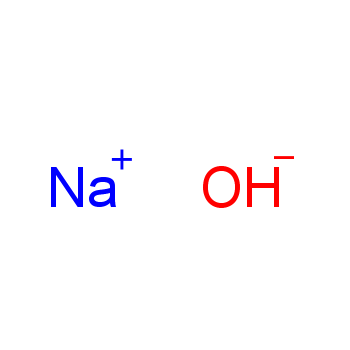
Sodium hydroxide stands as the most widely utilized strong base in the chemical industry, presenting itself in the form of a white, odorless, crystalline solid at room temperature. Recognized as caustic soda or lye, it carries high corrosive and toxic properties. This substance plays a pivotal role as an alkali in the production of various products, including detergents, paper, synthetic fabrics, cosmetics, and pharmaceuticals. It is a key component in numerous common cleaners, degreasers, drain cleaners, and personal care products.
The large-scale production of sodium hydroxide commenced in the mid-19th century, employing soda ash and lime in a process known as the lime causticization method, which is now obsolete. This method involved the reaction of slaked lime (Ca(OH)2) and soda ash (Na2CO3): Ca(OH)2(aq) + Na2CO3(aq) → 2NaOH(aq) + CaCO3(s). Simultaneously, Charles Watt demonstrated an alternative method, showcasing the electrolysis of brine. Watt's electrolytic cell application resulted in sodium hydroxide and hydrogen at the anode, along with chlorine at the cathode: 2NaCl(aq) + 2H2O(l) → Cl2(g) + 2NaOH(aq) + H2(g).
The groundwork laid by Watt led to the contemporary electrolysis method, independently developed during the 1880s by American chemist Hamilton Young Castner (1858-1899) and Austrian chemist Karl Kellner (1850–1905). Castner's pioneering work focused on devising a cost-effective method for sodium production, significantly contributing to the aluminum industry. Prior to the late 1800s, aluminum was deemed precious due to challenges in obtaining it in pure form. Castner's innovative approach utilized the reduction of aluminum chloride with sodium. While initially employed in England, the Hall-Héroult method, developed by Charles Martin Hall (1863–1914) and Paul L. T. Héroult (1863–1914), eventually replaced Castner's sodium method for aluminum production. This shift prompted Castner to redirect his efforts towards gold extraction, necessitating high-quality sodium hydroxide. His collaboration with Kellner resulted in the establishment of the Castner-Kellner Alkali Company, positioning sodium hydroxide as a competitive industrial base alongside soda ash and potash, while also contributing to the production of chlorine primarily used for bleach manufacturing.
As the demand for chlorine increased throughout the 20th century, the electrolysis method for producing sodium hydroxide gradually supplanted the lime causticization method. By 1970, sodium hydroxide was exclusively manufactured through electrolysis. Various types of electrolytic cells are employed for sodium hydroxide production, typically falling into two general categories: diaphragm and mercury cells. The prevalent method involves diaphragm cells, where a diaphragm separates chambers, each containing multiple electrodes. Initially, these diaphragm cells used asbestos, but modern variants utilize specialized polymers. The reaction occurring in the diaphragm cell is represented as 2NaCl(aq) + 2H2O(l) → Cl2(g) + H2(g) + 2NaOH(aq). The anode and cathode are constructed from graphite or steel alloys. Brine, a saturated 25% NaCl solution from which calcium and magnesium ions have been removed, is elevated in the anode chamber to pass through the diaphragm. Chlorine is oxidized at the anode, and hydrogen, along with dilute sodium hydroxide (mixed with unreduced sodium chloride), is produced at the cathode. Membrane cells, an alternative, use a selective membrane in place of the diaphragm, enhancing efficiency by allowing the passage of positive ions (Na?) from the anode to cathode chambers.
Contemporary mercury cells, rooted in the original designs of Castner and Kellner, utilize mercury as the cathode. Sodium produced forms an amalgam, which then moves to a water chamber. Here, graphite catalyzes the dissociation of sodium from the mercury. The sodium subsequently reacts with water to produce sodium hydroxide according to the reaction: 2Na(s) +2H2O(l) → 2NaOH(aq) + H2(g). Commercially, sodium hydroxide is sold as anhydrous flakes or pellets or as 50% or 73% aqueous solutions. It boasts myriad industrial applications, ranking among the top 10 chemicals globally in terms of production and utilization. Approximately 15 million tons of sodium hydroxide are used annually, with its largest application, consuming about half of its production, being as a base in the production of other chemicals. It is extensively utilized in the paper industry during the pulping process to separate fibers by dissolving connecting lignin. Similarly, in the production of rayon from cellulose, sodium hydroxide is employed in a comparable manner. The chemical plays a pivotal role in the soap industry, contributing to the saponification process where triglycerides from animals and plants are heated in a basic solution to produce glycerol and soap.

In the textile industry, sodium hydroxide is employed for bleaching and treating textiles to enhance dye absorption. The petroleum industry incorporates sodium hydroxide in drilling muds and as a bactericide. Sodium hypochlorite (NaOCl), derived from sodium hydroxide, finds extensive use in cleaning and disinfection, constituting a major component in common household bleach solutions. Sodium hydroxide's application extends to the food industry for cleaning and peeling fruits and vegetables. It serves as a minor ingredient in numerous household products, with some formulations containing up to 100% sodium hydroxide in certain drain cleaners such as Drano crystals.
Richard L. Myers (2009). The 100 Most Important Chemical Compounds: A Reference Guide. Greenwood Publishing Group. October 1, 2009. https://doi.org/10.1021/ed086p1182
 |
 |
 |
 |
 |
 |
 EN
EN
 Agricultural News
 Food News
 Industrial News
 Cosmetic News
 Pharmaceutical News
 Science News

 1YR
1YR

