-
We detected your language preference as English. Would you like to switch to the English version for a better experience?
Switch to English
Stay here




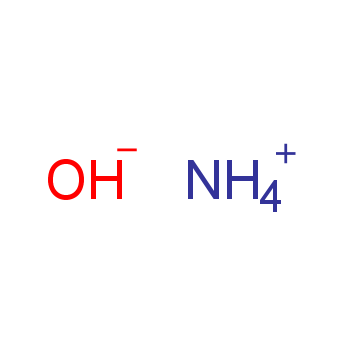
Ammonium Hydroxide, with the chemical formula H5NO and CAS number 1336-21-6, is an aqueous solution of ammonia in water. It is widely used in industrial cleaning, food processing, and as a chemical reagent in laboratories.
Ammonia, represented by the formula NH3, is a gas with the CAS number 7664-41-7. It is a vital industrial chemical, commonly used in fertilizer production, refrigeration systems, and as a precursor to many other chemical compounds.
Ammonium Hydroxide and Ammonia are closely related but differ significantly in their physical state, chemical composition, and applications. Ammonium Hydroxide is a solution derived from dissolving ammonia gas in water, whereas ammonia exists as a gas under standard conditions.


Ammonium Hydroxide and Ammonia share a chemical basis but differ significantly in their state and practical applications, with ammonia serving as a building block for ammonium hydroxide in aqueous solutions.
Ammonium hydroxide and ammonia play pivotal roles across various industrial, household, and laboratory applications, each catering to specific requirements due to their unique chemical properties. This section delves into their practical uses and the contexts in which each compound excels.

Ammonium hydroxide, commonly referred to as aqueous ammonia, finds extensive use in the industrial sector. Its primary application is in the manufacture of fertilizers, where it serves as a nitrogen source essential for plant growth. Additionally, it plays a crucial role in the production of household cleaning products, leveraging its ability to dissolve grease and stains effectively.
In water treatment facilities, ammonium hydroxide is employed to adjust pH levels and control water hardness, ensuring safety and compliance with regulatory standards. Its mild alkaline nature makes it suitable for applications requiring careful pH adjustments without excessive reactivity. The compound is also used in the textile industry for dyeing and scouring processes, enhancing the quality and finish of fabrics.
Ammonia, in its gaseous form, is indispensable in agriculture and industrial refrigeration. As a cornerstone of the agricultural sector, ammonia is a critical raw material for synthesizing nitrogen-based fertilizers, such as urea and ammonium nitrate. Its direct application in soil conditioning helps to increase crop yields and enhance food security.
The refrigeration industry heavily relies on ammonia for its exceptional thermodynamic properties. As a refrigerant (R717), ammonia is both energy-efficient and environmentally friendly, offering a low Global Warming Potential (GWP) and zero Ozone Depletion Potential (ODP). It is widely utilized in industrial cooling systems, such as those in food processing and cold storage facilities.

In the laboratory, ammonium hydroxide is a versatile reagent, frequently used for titration and as a complexing agent in qualitative analysis. It aids in the detection of metal ions, such as copper and nickel, by forming distinctive complexes that simplify their identification. Ammonia gas, on the other hand, is employed in various analytical techniques, including the preparation of ammonia buffers and in spectroscopy experiments.
Together, ammonium hydroxide and ammonia serve as foundational compounds in scientific research, supporting advancements in chemistry and material sciences.
In household settings, ammonium hydroxide is a common ingredient in cleaning agents, prized for its ability to cut through grime and polish surfaces. It is particularly effective in cleaning glass, porcelain, and stainless steel items, leaving a streak-free finish. Ammonia, while less common in direct household use due to its gaseous nature, is found in specific industrial-grade cleaning solutions.
Moreover, ammonia is integral in the synthesis of pharmaceuticals and chemical intermediates, underscoring its importance in diverse sectors beyond its conventional uses.
| Aspect |
Ammonium Hydroxide |
Ammonia |
|---|---|---|
| Corrosiveness | Moderate, can damage surfaces with prolonged contact | High, poses risks to equipment and materials |
| Toxicity | Can irritate skin and eyes | Hazardous, causes severe respiratory issues |
| Storage | Easier, liquid form under ambient conditions | Challenging, requires pressurized or refrigerated storage |
If you're looking to purchase these compounds, Guidechem is your go-to platform for sourcing high-quality raw materials and reliable suppliers. With our extensive global network, we connect you to a wide range of Ammonium Hydroxide suppliers, ensuring you find the right products to meet your specific research or production requirements. Whether you're in pharmaceuticals, food additives, or other industries, Guidechem simplifies the sourcing process, offering verified supplier information, competitive pricing, and seamless communication.
 |
|
 |
 EN
EN
 Agricultural News
 Food News
 Industrial News
 Cosmetic News
 Pharmaceutical News
 Science News

 5YRS
5YRS


